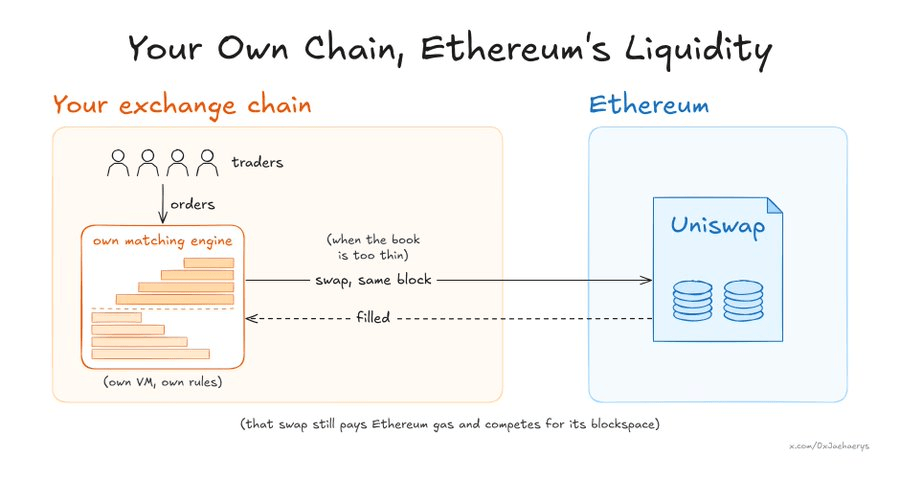
For a builder, moving a contract action between Ethereum and a rollup normally means dealing with separate chains and asynchronous transfers. In an article published on November 13, 2026, at 14:05 (UTC+8), 0xJaehaerys of 白话区块链 described the Ethereum Economic Zone (EEZ) as a way for connected chains to use one another’s contracts and liquidity within the same Ethereum block.
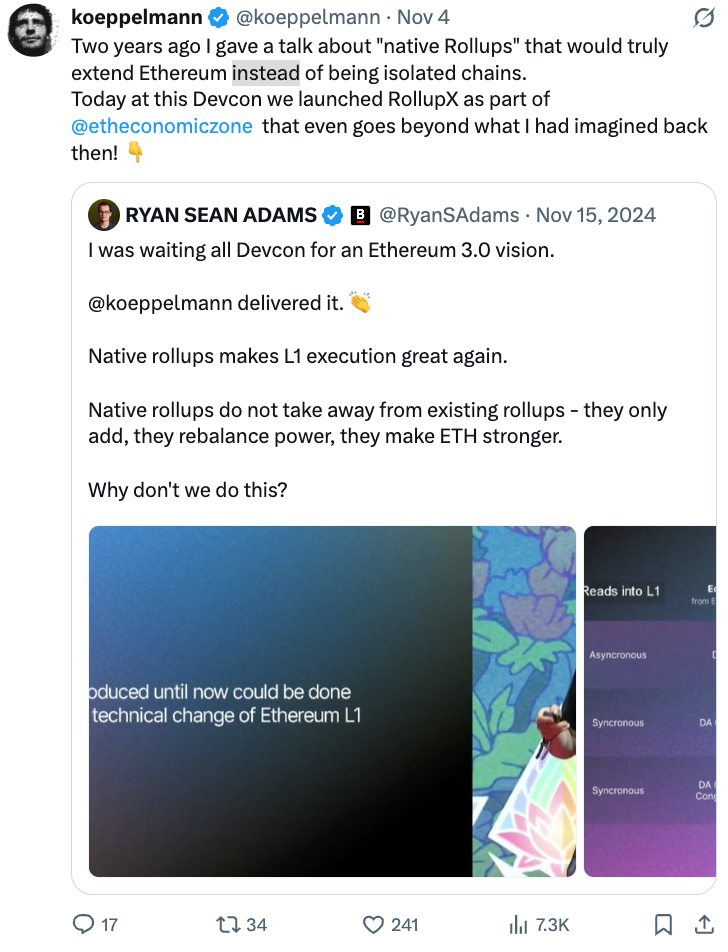
EEZ is not a new chain or development stack. The article describes it as contracts on Ethereum plus rules connecting participating chains. Each chain can retain its own virtual machine, transaction ordering and admission rules. To join, a chain must prove its state within one Ethereum slot—a 12-second interval—and roll back if Ethereum reorganizes and discards a block.
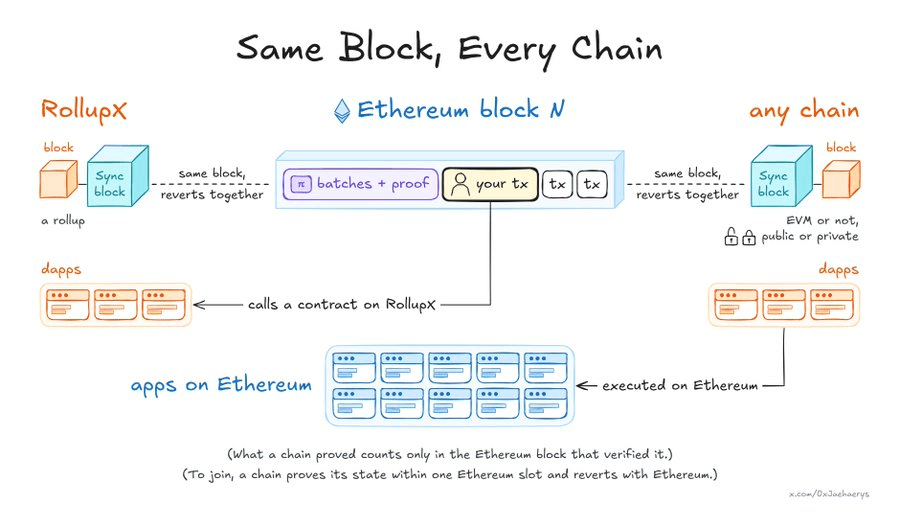
What happens when a contract calls another chain?
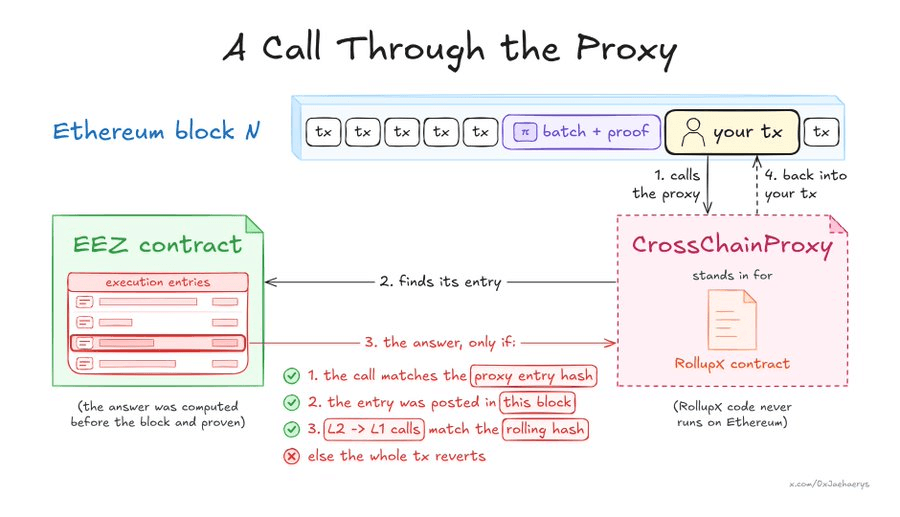
In the described design, a contract calls a predictable proxy address representing a contract on the other chain. Before the block is built, a composer runs the transaction across the chains involved and prepares an execution table of cross-chain calls and their expected answers. A proof covers that table.
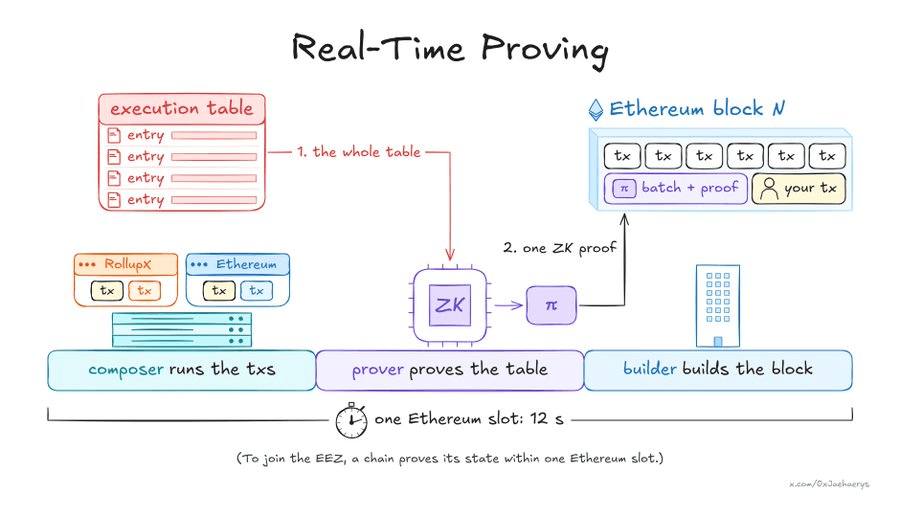
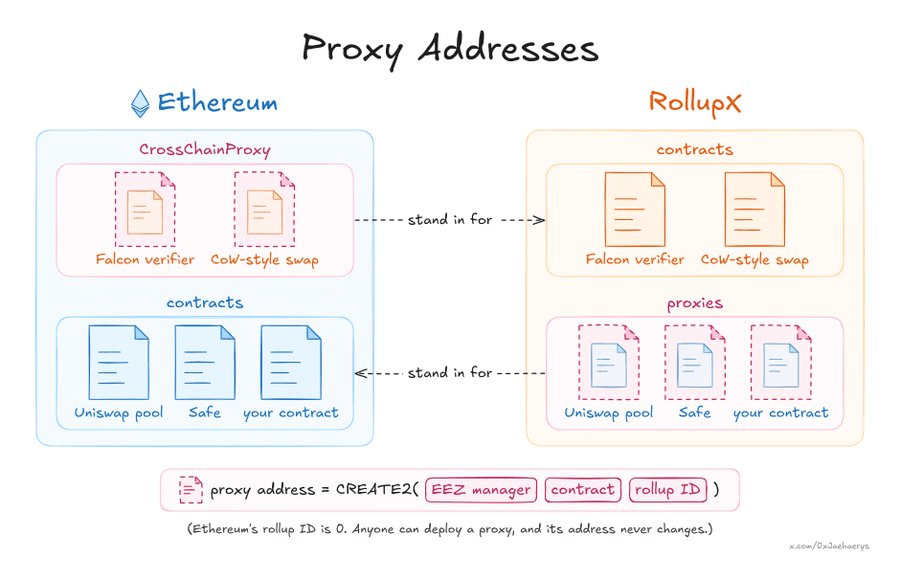
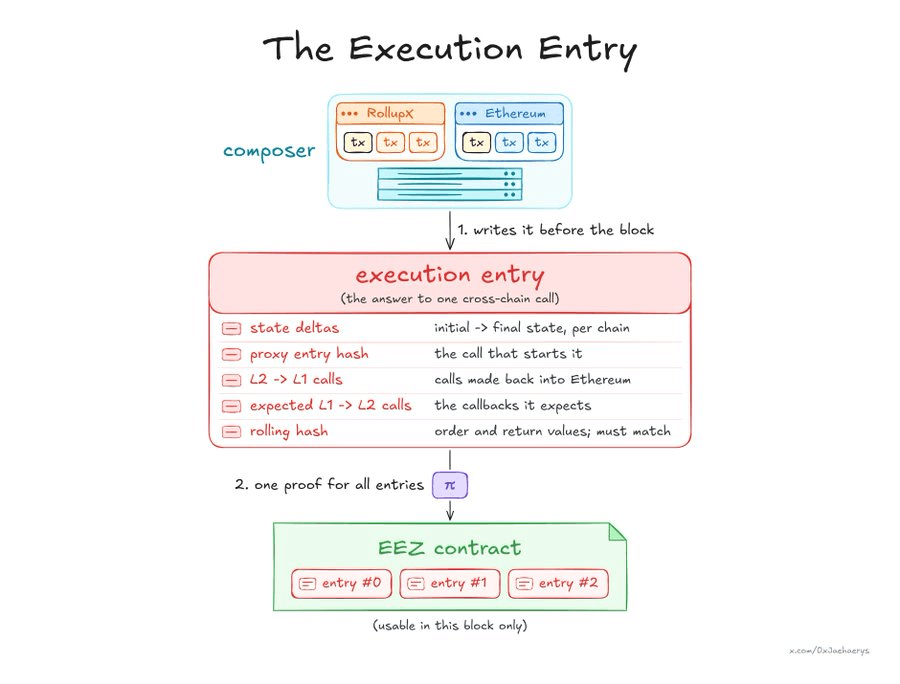
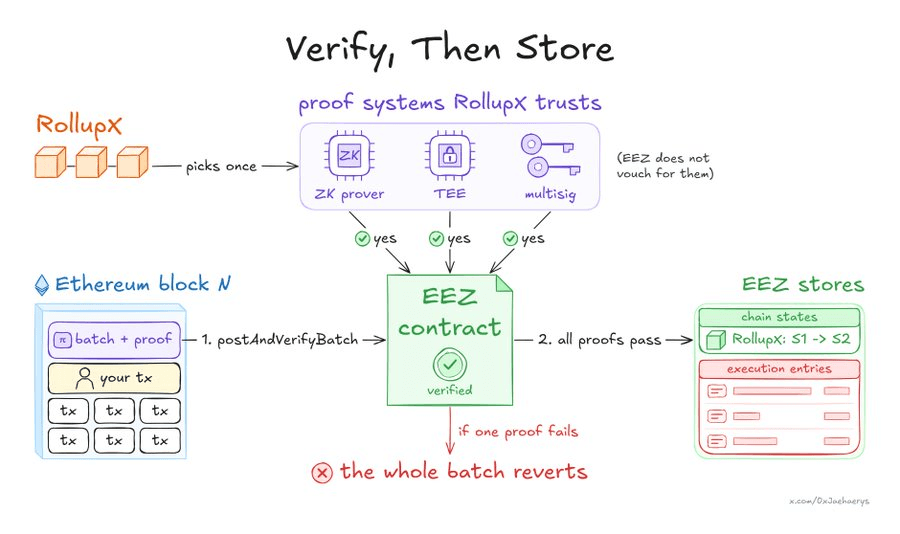
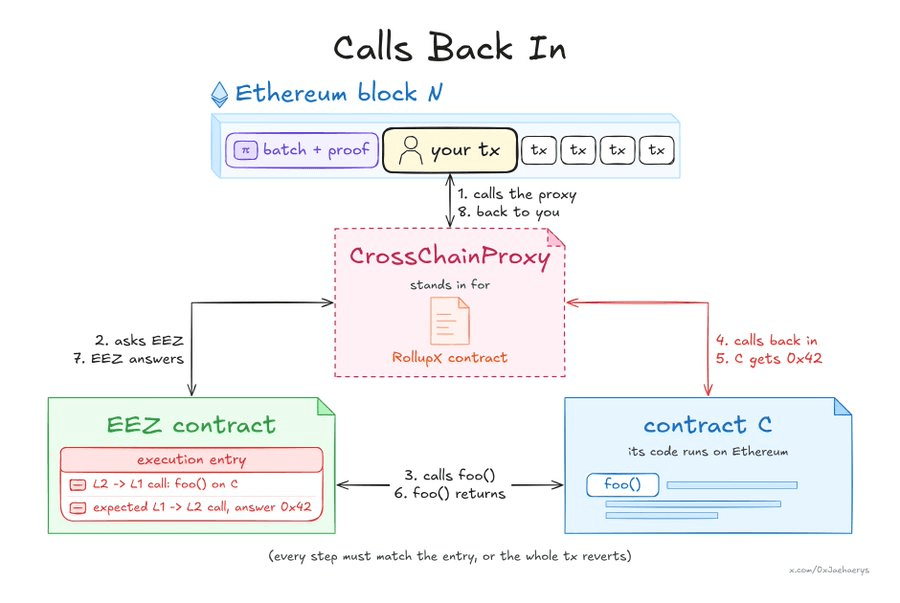
The block builder receives a bundle that first submits the table and verifies its proof through postAndVerifyBatch. Subsequent transactions can then call the proxies, which read answers from the verified table. The article says a proxy responds only when the actual call matches the simulated one, the entry arrived in a batch in the same block, and the relevant callback record matches. A participating rollup’s onboarding rules determine which proof systems it trusts and how many proofs a batch needs.
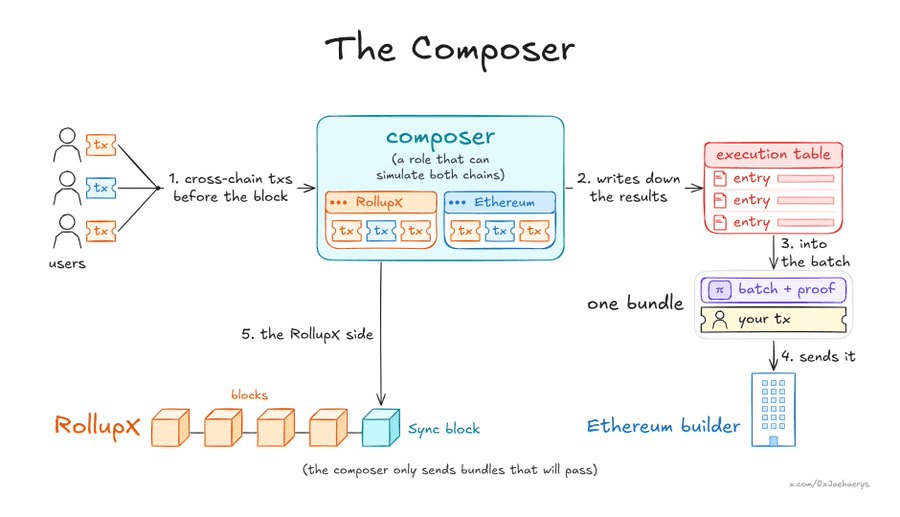
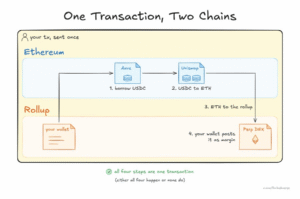
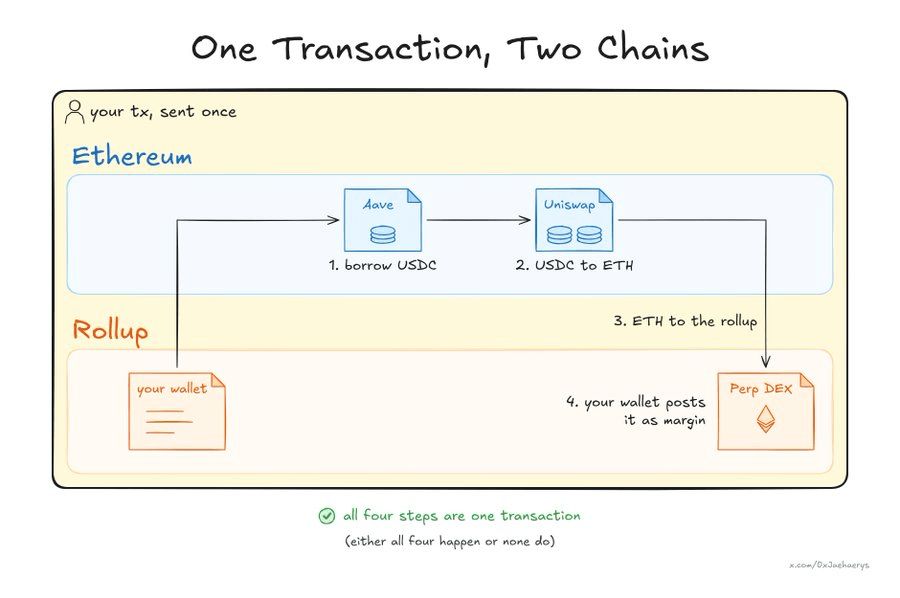
The author uses a proposed sequence—borrow USDC on mainnet Aave, swap it for ETH on Uniswap, then deposit it as margin—as an illustration of what one rollup-initiated transaction could do. In that account, the composer does not send the bundle if its simulation finds a failed step; if Ethereum’s execution differs from the simulation, the operations on Ethereum and the rollup roll back. This is a description of the EEZ workflow, not a tested instruction to execute that trade.
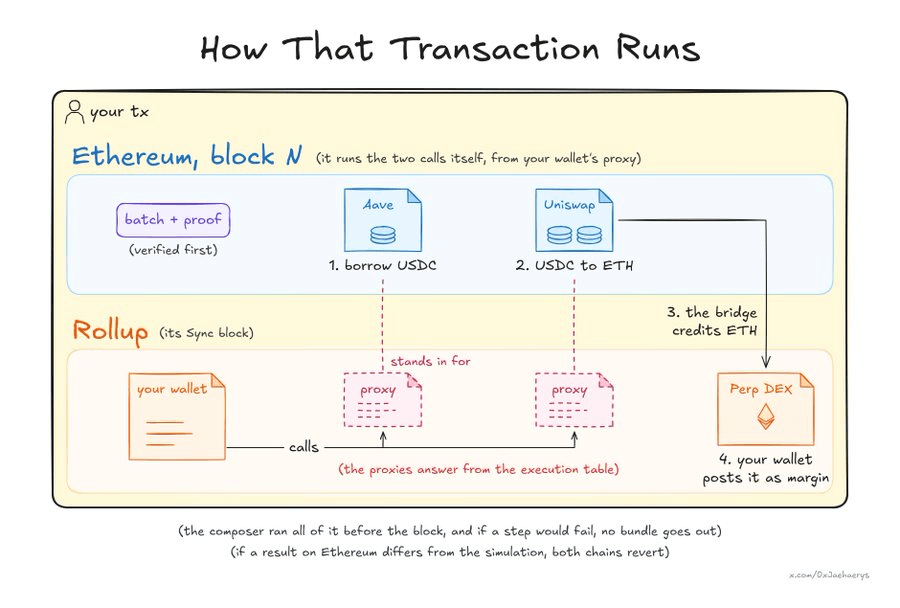
Examples and constraints reported in the article
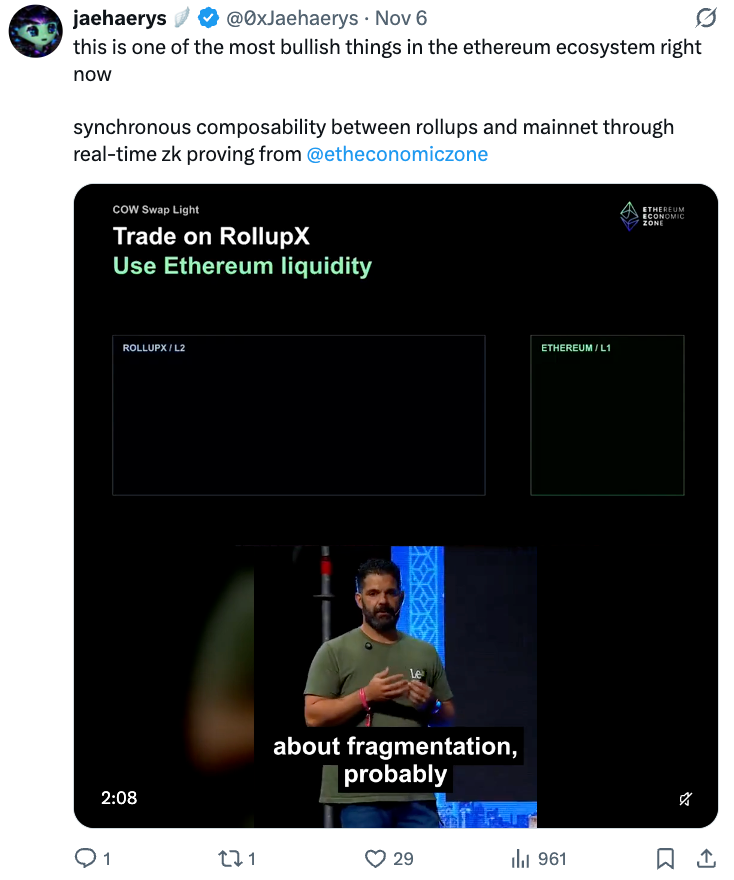
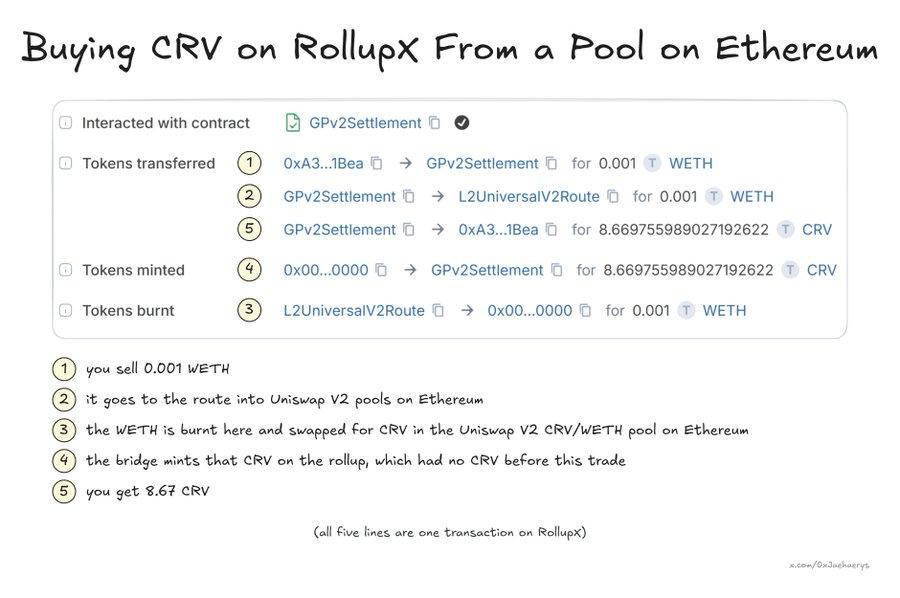
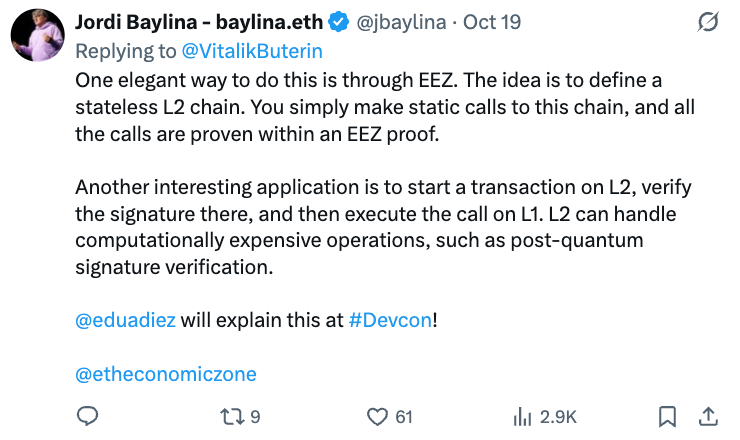
The author reports a RollupX transaction that bought CRV from an Ethereum Uniswap pool and minted wrapped CRV on the rollup in the same transaction. Other examples described include a Safe proxy on RollupX that checks signer permissions held on mainnet, and a demonstration in which rollup verification of a Falcon signature authorized an L1 Safe payment. The supplied article does not provide independently verifiable transaction links for those examples.
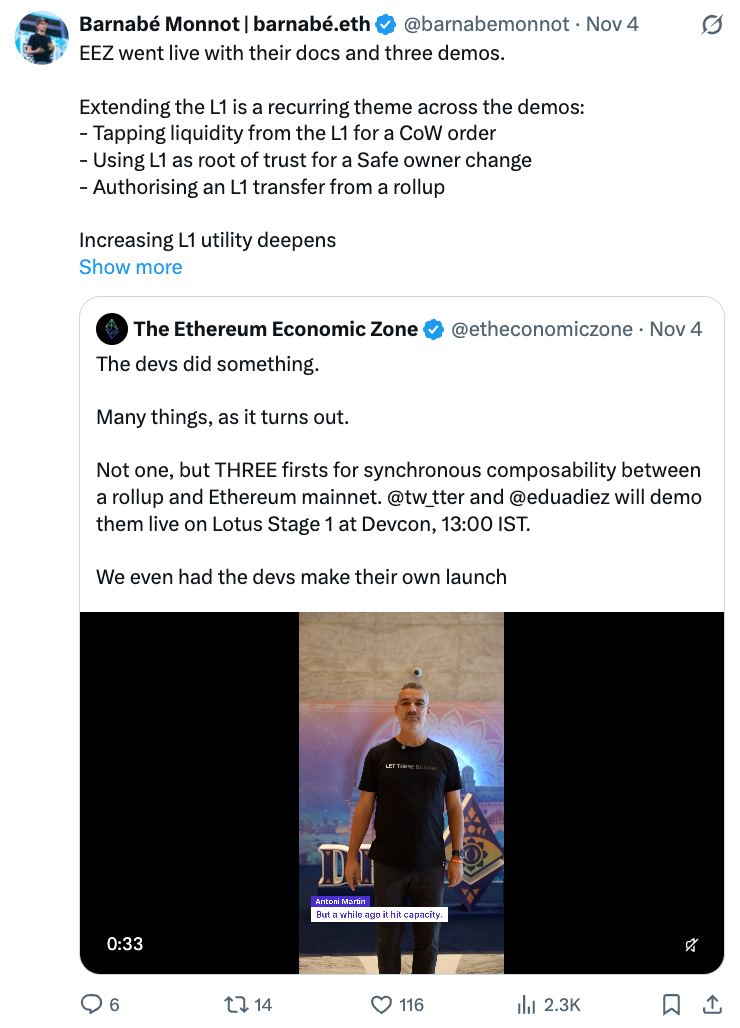
The design also has trade-offs. According to the article, a chain cannot simultaneously have fast blocks, synchronous Ethereum calls and decentralized sequencing. Cross-chain calls pass through a composer that must see unencrypted transactions before block production, giving the composer and builder an advantage in accessing potential maximal extractable value (MEV). The author also reports that, at the time of writing, validators built 7% of Ethereum blocks themselves; synchronous calls would not occur in those slots. These are reported characteristics and observations, not evidence that EEZ has achieved broad adoption.
Source: techflowpost.com (originally published 2026-11-13 14:05 UTC+8)