When building a private onchain application, the first question is not simply whether a transaction is “encrypted.” It is which information each participant must see to execute and verify it—and what a wallet or network service might learn before the transaction is sent.
This is a historical-source explainer based on an article published November 16, 2026, at 09:29 (UTC+8). It traces the privacy problem from Bitcoin’s public ledger to programmable contracts and wallet queries; it does not report a new protocol release.
The starting point: a verifiable, public ledger
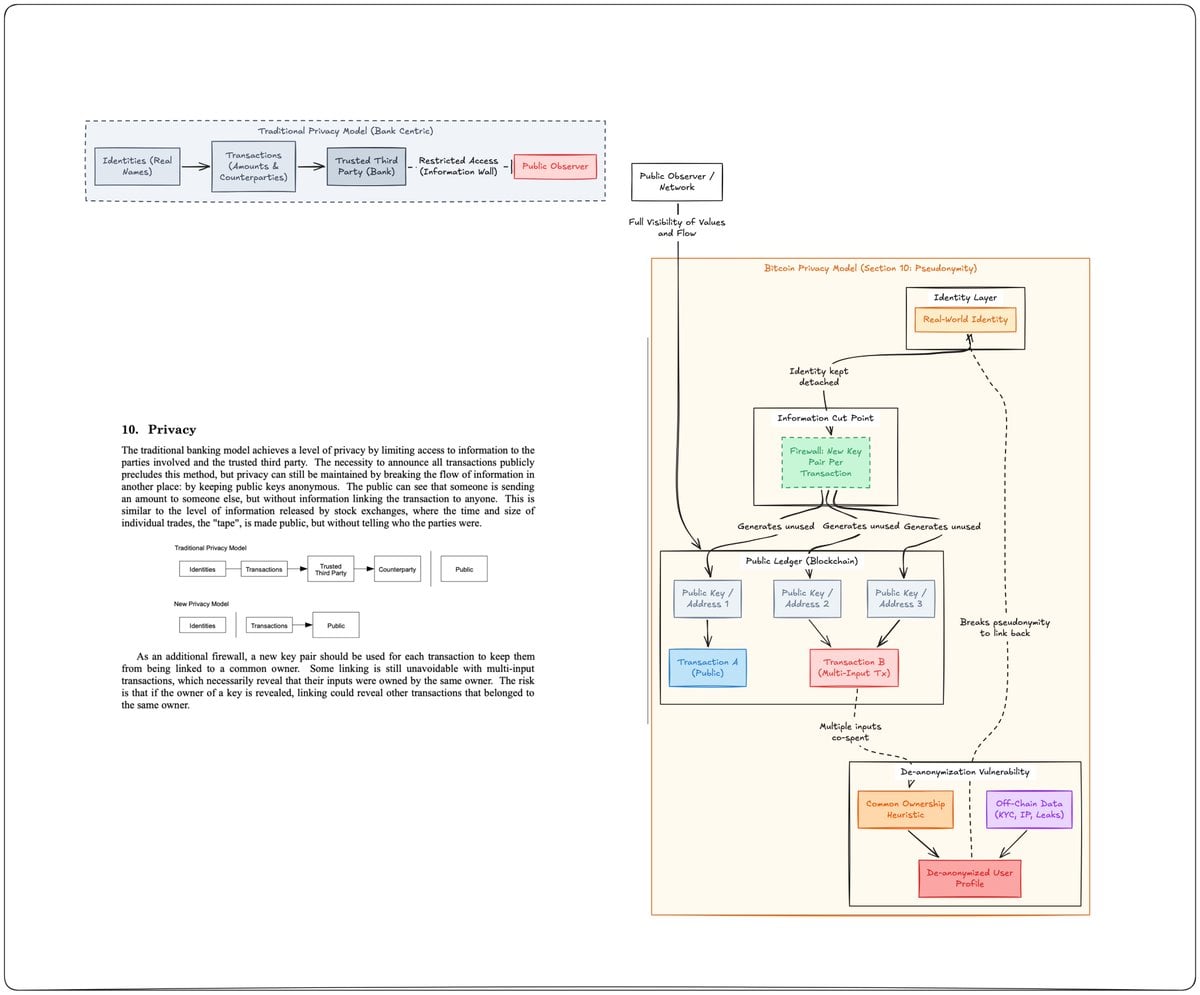
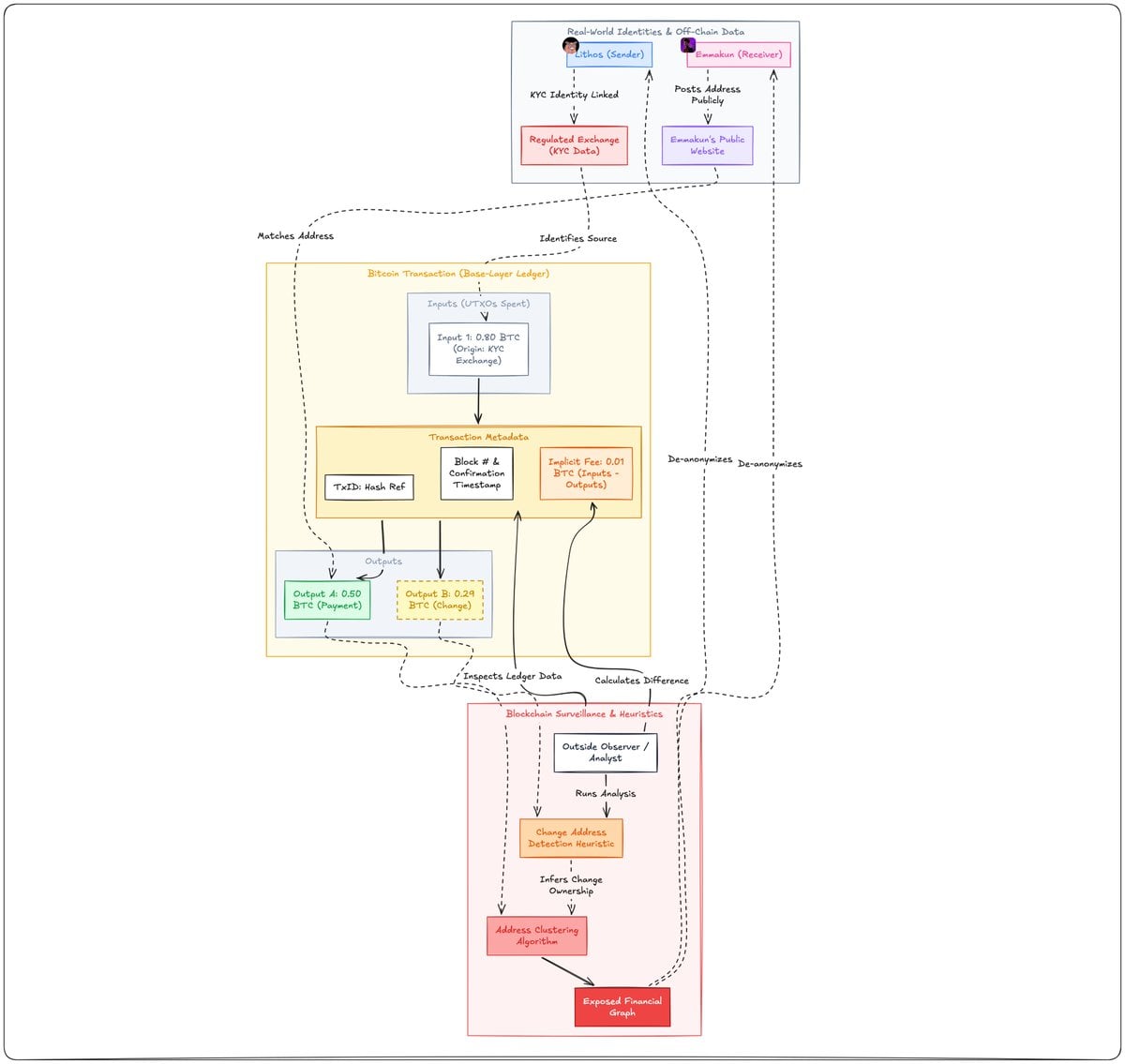
A Bitcoin transaction exposes its inputs, outputs and amounts, along with the block in which it is confirmed. Addresses do not directly contain people’s names, but an address linked to a real-world identity can make related activity easier to investigate. Analysts also use assumptions about shared inputs and change outputs to map payments, though those assumptions are not always right.
Satoshi Nakamoto acknowledged this trade-off in Section 10 of the 2008 Bitcoin white paper. The proposed privacy measure was to keep public keys separate from identities and use new key pairs for new transactions. Nakamoto also noted that combining multiple inputs can reveal a link between them. This is pseudonymity, not confidentiality: transaction details remain public even when the people behind addresses are unknown.
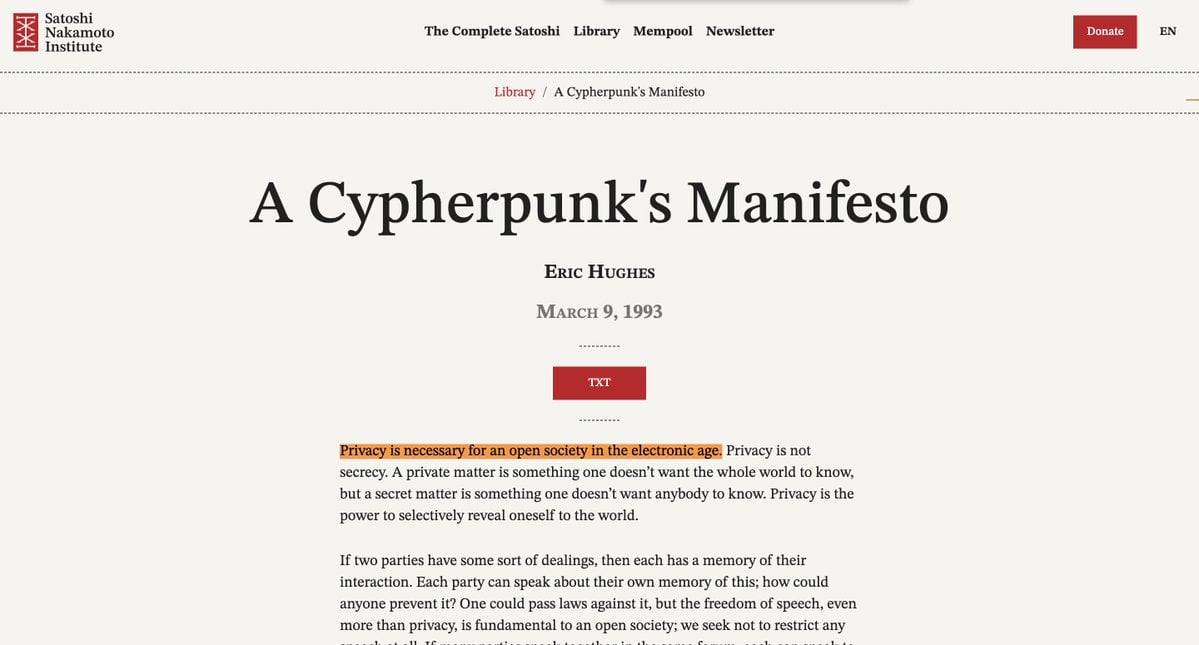
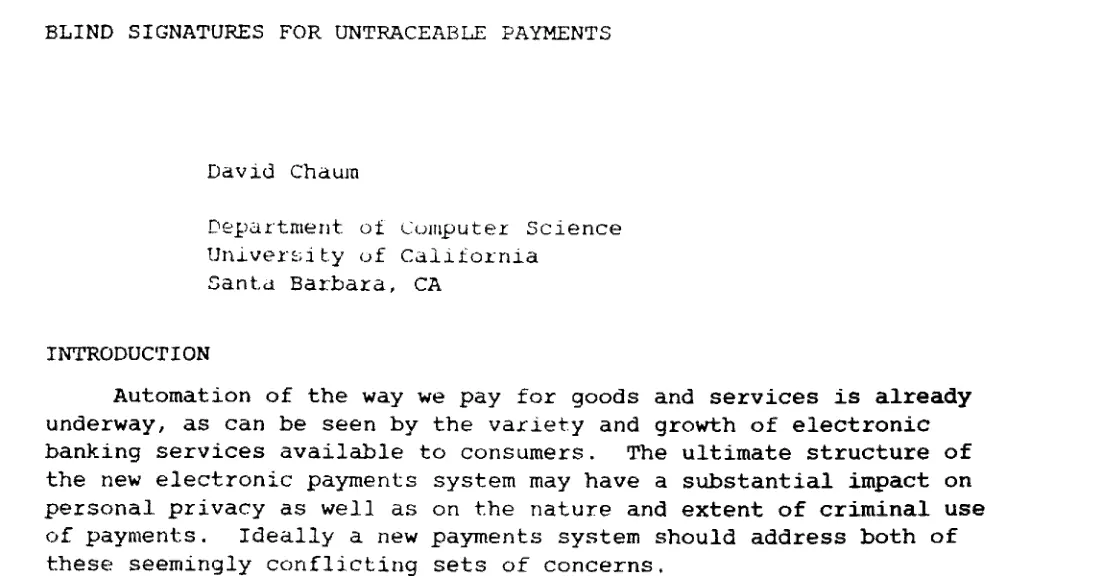
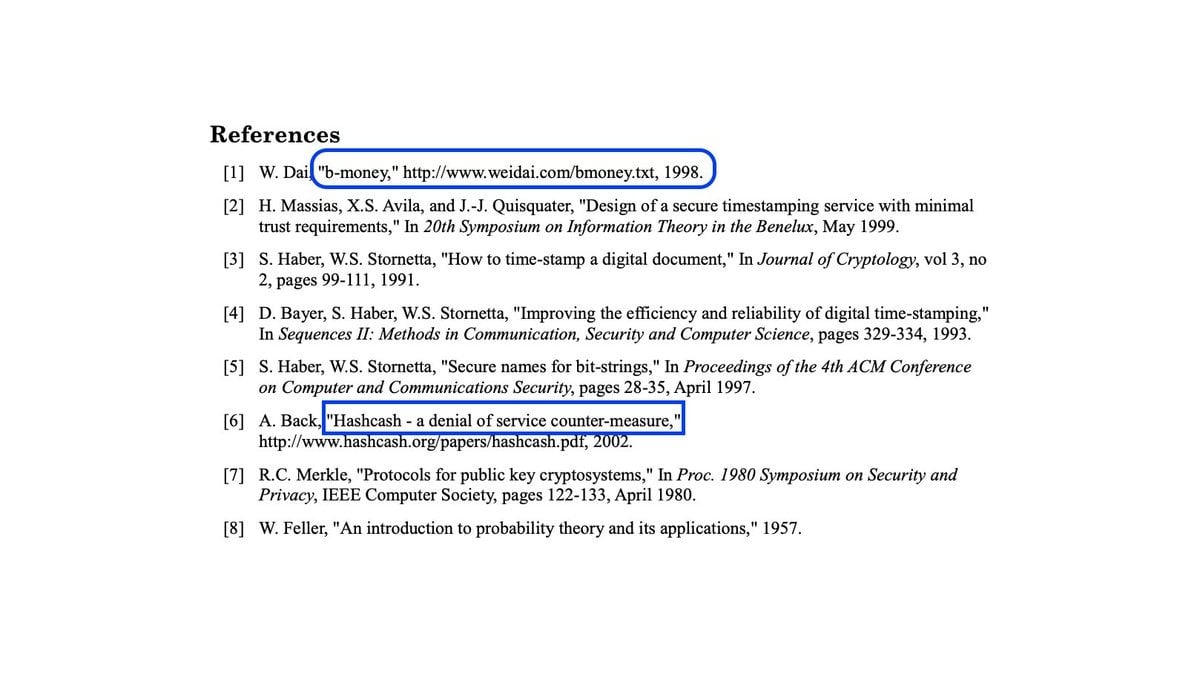
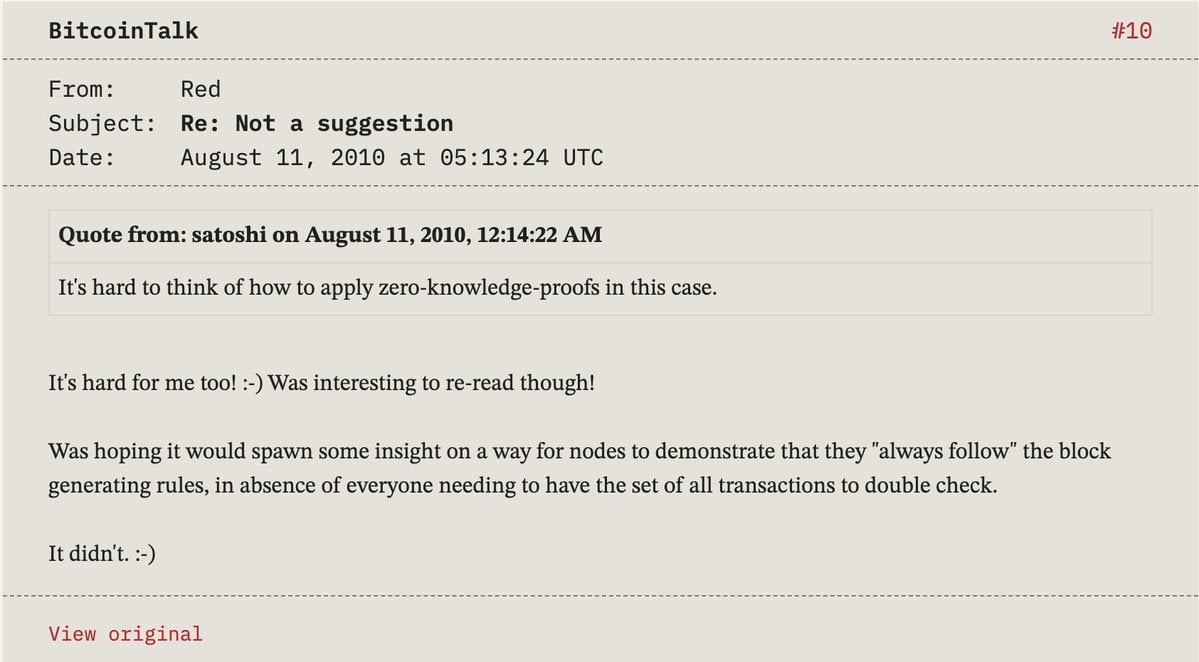
The question predates Bitcoin. David Chaum’s 1982 work on blind signatures explored payments that an issuer could not link to their eventual use, while still relying on a central issuer. Later digital-cash proposals, including Hashcash and b-money, informed the setting in which Bitcoin emerged. In a 2010 BitcoinTalk discussion about validating payments without retaining a full transaction history, Nakamoto described the difficulty of applying zero-knowledge proofs to that particular double-spend problem—not a general rejection of such proofs.
Different tools protect different information
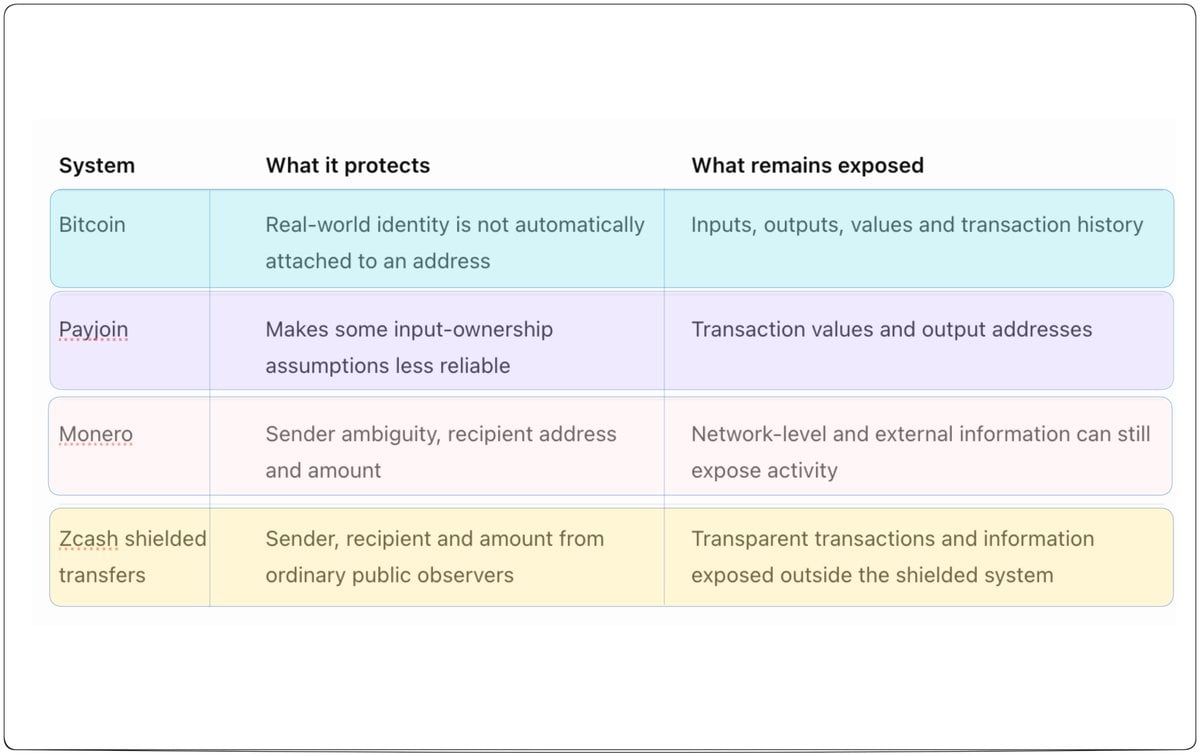
For a builder, “privacy” is a set of separate design decisions:
- Payjoin, specified in BIP 78, lets a Bitcoin recipient contribute an input to a payment transaction. That undermines the common analytical assumption that all inputs belong to the sender. It does not hide the transaction amounts.
- Monero combines ring signatures, one-time recipient addresses and RingCT to obscure spending, recipients and amounts onchain. Sender privacy still depends on the ring and information available to an observer. Its Dandelion++ broadcast mechanism reduces some network-tracing risk but does not eliminate network-level observation.
- Zcash shielded transactions use zero-knowledge proofs to validate transfers while concealing their sender, recipient and amount on the public ledger. Zcash also has transparent addresses; activity involving them remains visible. Viewing keys offer a way to disclose transaction details to a chosen party without handing over spending authority.
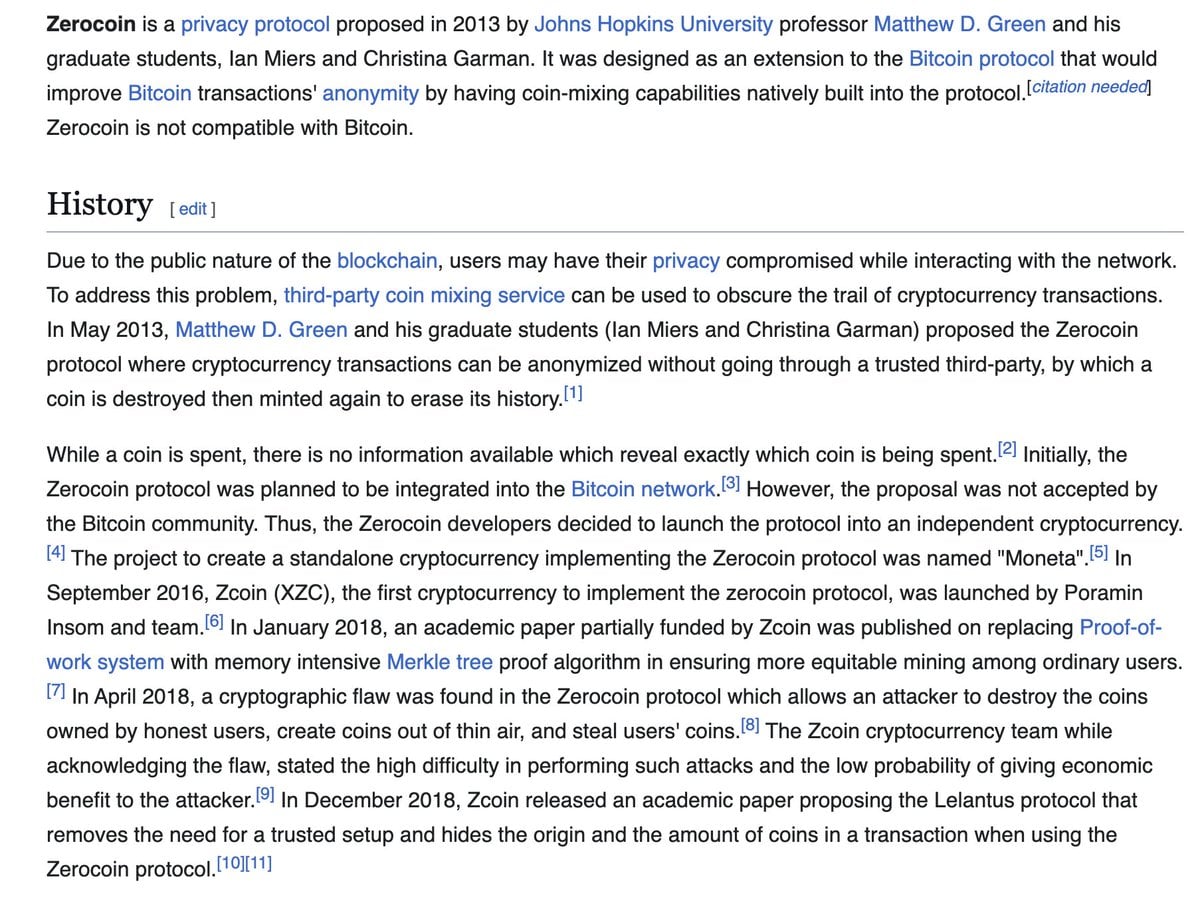
Zero-knowledge research helped move the design goal beyond obscuring an address’s owner. The 2013 Zerocoin paper examined breaking the link between a payment and its source, while leaving other details exposed. The 2014 Zerocash work developed a protocol using zk-SNARKs—compact, non-interactive zero-knowledge proofs—to validate payments while hiding more of their details.
What changes when the application is a smart contract?
A payment protocol is not enough for an application that handles votes, eligibility, trades or other sensitive inputs. Contract designers must decide where a computation runs, which state is public, and what evidence the network receives.
Aztec describes an Ethereum Layer 2 design in which contracts can combine private and public functions. Private functions run locally in a private execution environment (PXE) and generate proofs; public functions run using network-visible state. An illustrative voting design could keep an individual choice private while publicly updating a tally. But querying a remote node for state can still reveal what data a client is interested in.
Oasis Sapphire takes a different route: confidential contract execution in a hardware trusted execution environment (TEE), with encrypted transaction inputs and confidential contract state. That changes the trust assumption. A TEE depends on the security of its hardware and implementation, whereas a zero-knowledge design depends on its proof system and the computation expressed within it.
Other designs draw the boundary elsewhere. The source describes Umbra V2 on Solana as centering private transfers within a shielded pool; deposits and withdrawals can still reveal amounts and timing. Privacy Pools, from 0xbow, uses zero-knowledge proofs and screened association sets so a withdrawing user can demonstrate membership in an accepted set without identifying the specific deposit. That is a selective-disclosure design, not a claim that every connection to a deposit becomes unknowable.
Privacy can leak before contract execution
A wallet may ask a remote RPC node for an account balance, transaction history, contract simulation or token information. Those requests can tell the service which address the user is examining, even if a later transaction uses a privacy-preserving protocol.
The source describes Kohaku as an open-source Ethereum privacy-oriented wallet and SDK specification addressing this infrastructure problem. One approach it discusses is private information retrieval (PIR): a way to obtain a requested result without revealing to the server which account was queried. This is a design aim described by the source, not evidence that every wallet query already has that protection.
For builders, the practical lesson is to map the entire information path: wallet queries, network broadcast, contract execution, public state and any movement into or out of a shielded pool. A proof can conceal contract inputs without concealing a client’s network activity; confidential execution can protect state without removing its hardware trust assumption. The useful question is not whether an application carries a “private” label, but what it reveals, to whom, and at which step.
Source: techflowpost.com (originally published 2026-11-16 09:29 UTC+8)