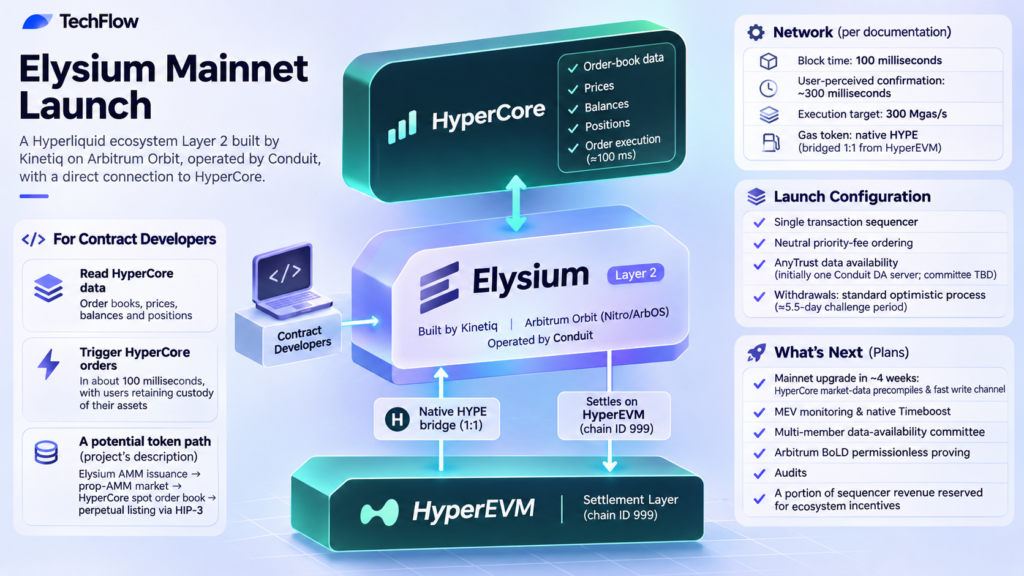
Builders working in the Hyperliquid ecosystem gained another place to deploy contracts when Elysium announced its mainnet launch. In a roundup published on November 10, 2026, TechFlow reported that the Layer 2 network was built by the Kinetiq team using Arbitrum Orbit (Nitro/ArbOS) and is operated by Conduit.
According to Elysium’s documentation, the network uses native HYPE as its gas token, bridged 1:1 from HyperEVM, and settles on HyperEVM (chain ID 999). The documentation lists a 100-millisecond block time, roughly 300-millisecond user-perceived confirmation and a 300 Mgas/s execution target. Those are documented specifications and a target, not independently measured performance results.
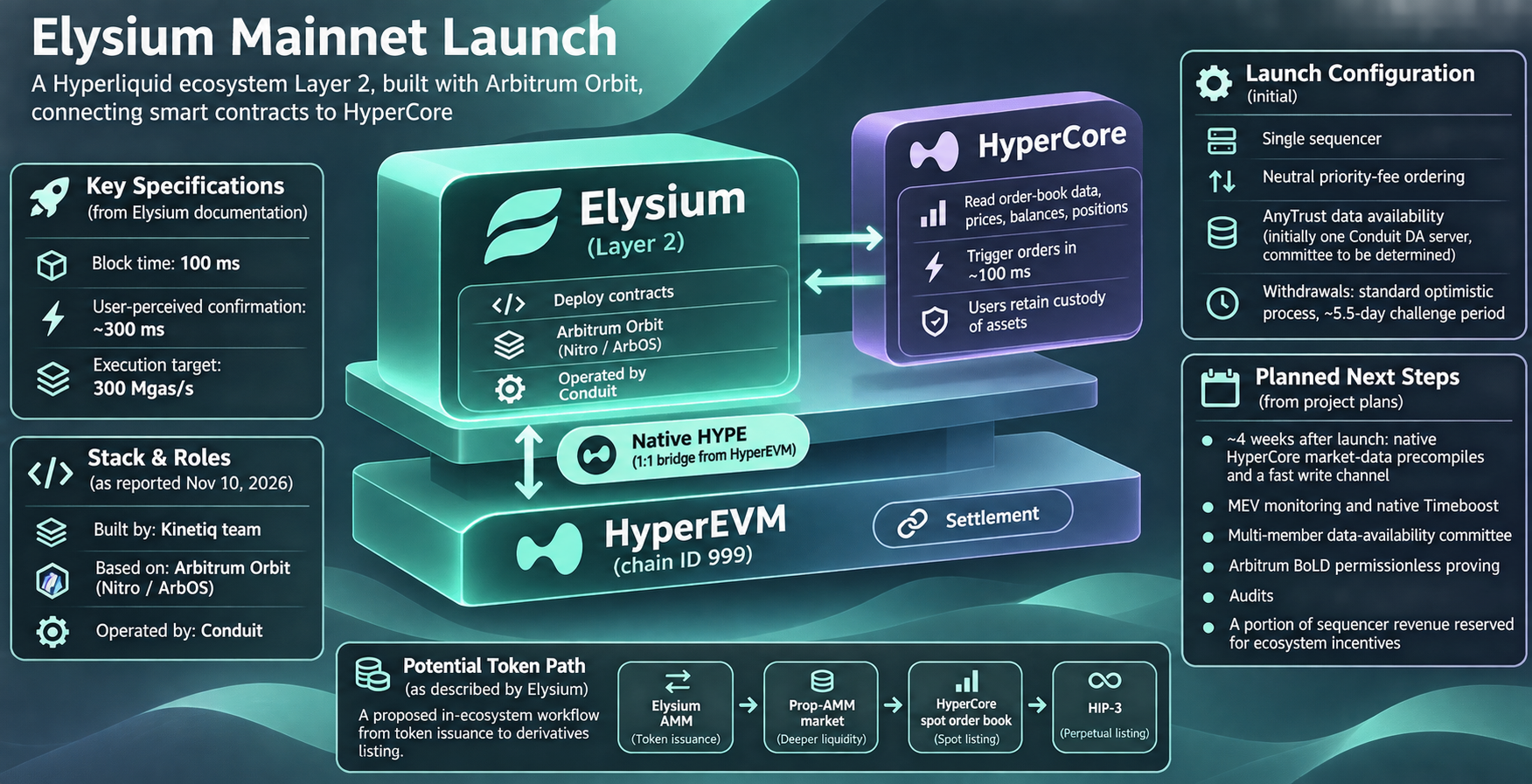
For contract developers, the distinguishing feature is the proposed connection to HyperCore. Elysium says contracts can read HyperCore order-book data, prices, balances and positions, and can trigger HyperCore orders in about 100 milliseconds while users retain custody of their assets. The team also describes a possible token path from issuance on an Elysium automated market maker (AMM), through a prop-AMM market, to a HyperCore spot order book and a perpetual listing via HIP-3. These are the project’s descriptions of available capabilities and a potential workflow, not evidence that projects have followed it.
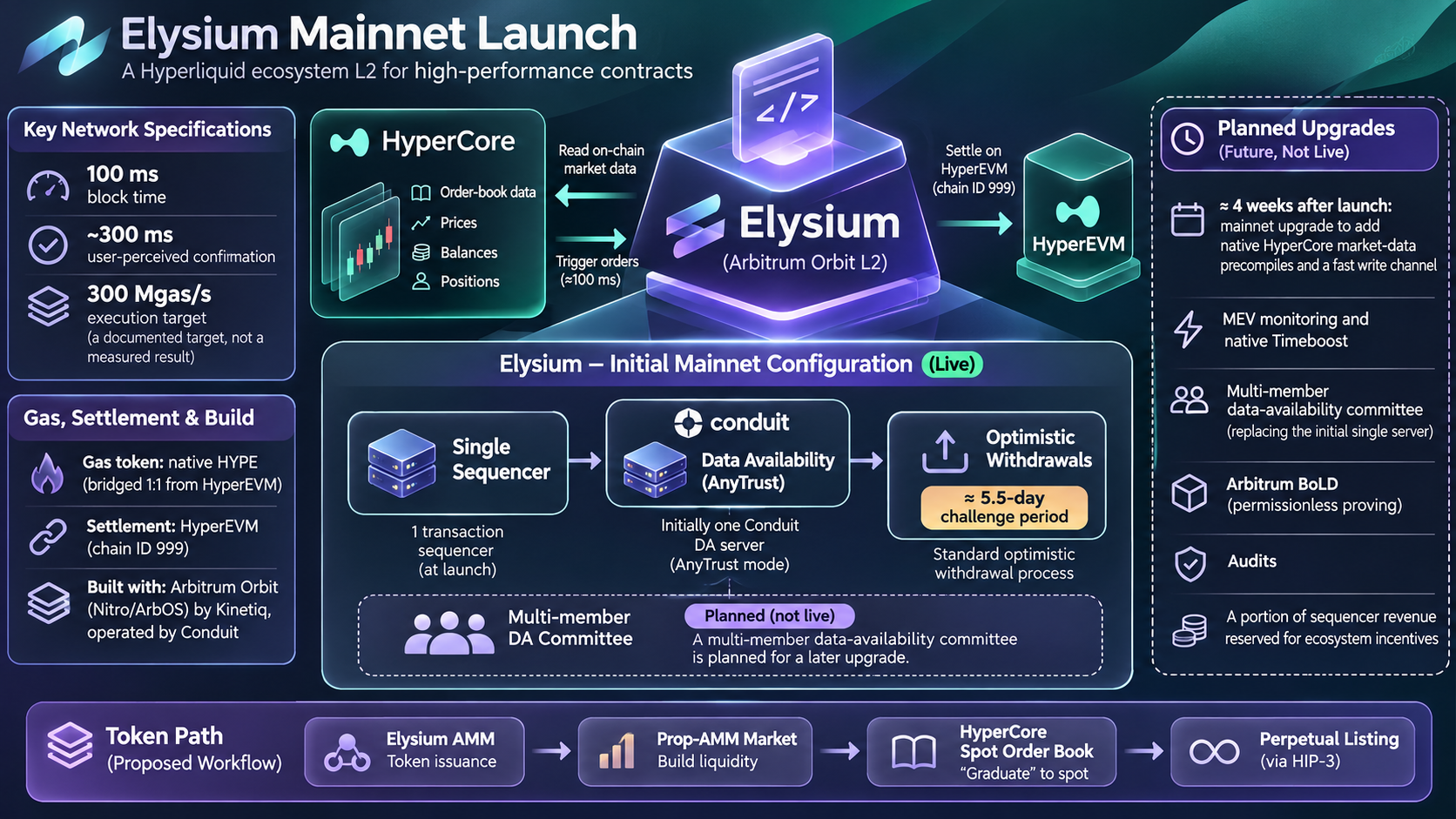
The launch configuration has important boundaries. Elysium initially uses a single transaction sequencer, neutral priority-fee ordering and AnyTrust data availability—initially through one Conduit data-availability server, with a committee still to be determined. Withdrawals use the standard optimistic process, with an approximately 5.5-day challenge period.
As described at the November 10 reporting date, a mainnet upgrade planned for about four weeks after launch would add native HyperCore market-data precompiles and a fast write channel. Further plans included MEV monitoring and native Timeboost, a multi-member data-availability committee, Arbitrum BoLD permissionless proving and audits. The report also said a portion of sequencer revenue was reserved for ecosystem incentives. These were plans, not completed upgrades.