For an AI service operator considering Pearl mining, the practical question is whether a GPU can serve model requests and produce valid proof-of-work blocks without losing too much inference capacity. As reported on November 19, 2026, Pearl’s FP8 upgrade, proposed as PIP-3, had activated on testnet. Its performance on mainnet remained unproven.
Pearl’s proposed duplex proof of work uses matrix calculations from AI inference—the work a model performs to answer a request—as part of the competition to produce blocks. Under the earlier INT7 format, the source says operators had to convert models and give up native acceleration, slowing model service by 10%–15%. FP8 support is intended to better match the lower-precision floating-point calculations used in data centers.
That change also narrows eligible hardware. According to the report, Pearl limits supported hardware for the upgrade to Nvidia’s Hopper and Blackwell generations, including H100 and B200 GPUs and RTX 50-series cards, because differences in FP8 rounding across chips complicate agreement on exact results. Older Nvidia generations, as well as AMD and Intel chips, are excluded.
What the test showed
Kairos Research, which held PEARL, reported testing the upgrade on a rented H100 running Llama 3.1 8B. The GPU served model requests and mined FP8 blocks on testnet. Against the same setup with mining disabled, however, throughput fell 18%–21% for ordinary conversations, 26% for long agent prompts and 40%–41% for long-prompt-only workloads. Compared with standard native FP8 inference, the reported reduction was 24%–48%. These results differ from the project’s stated expectation of a 1%–5% inference penalty.
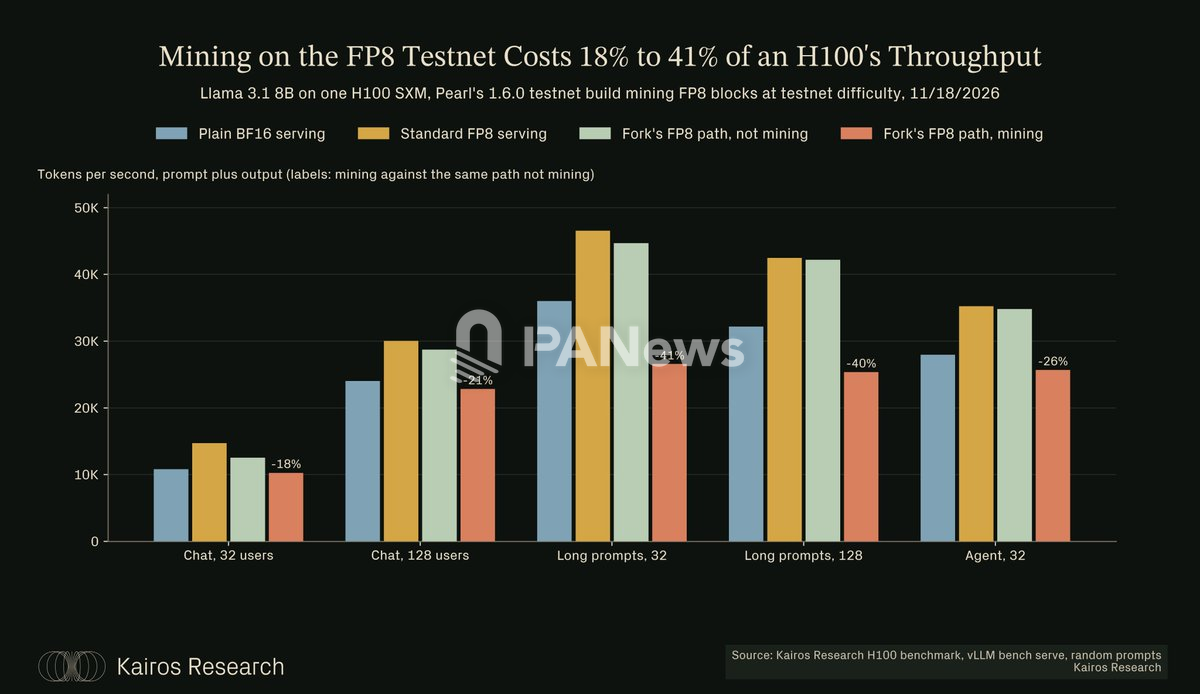
Kairos also found that effective mining was limited to prefill, when the model processes a prompt. Mining during answer generation reportedly reduced accuracy on a math evaluation from about 87% to 1%. Model compatibility varied: OLMoE ran, while the tested Qwen3 models could not be loaded. The test demonstrates simultaneous inference and block production on one setup, not that the approach is yet economical across production workloads.
Questions before mainnet
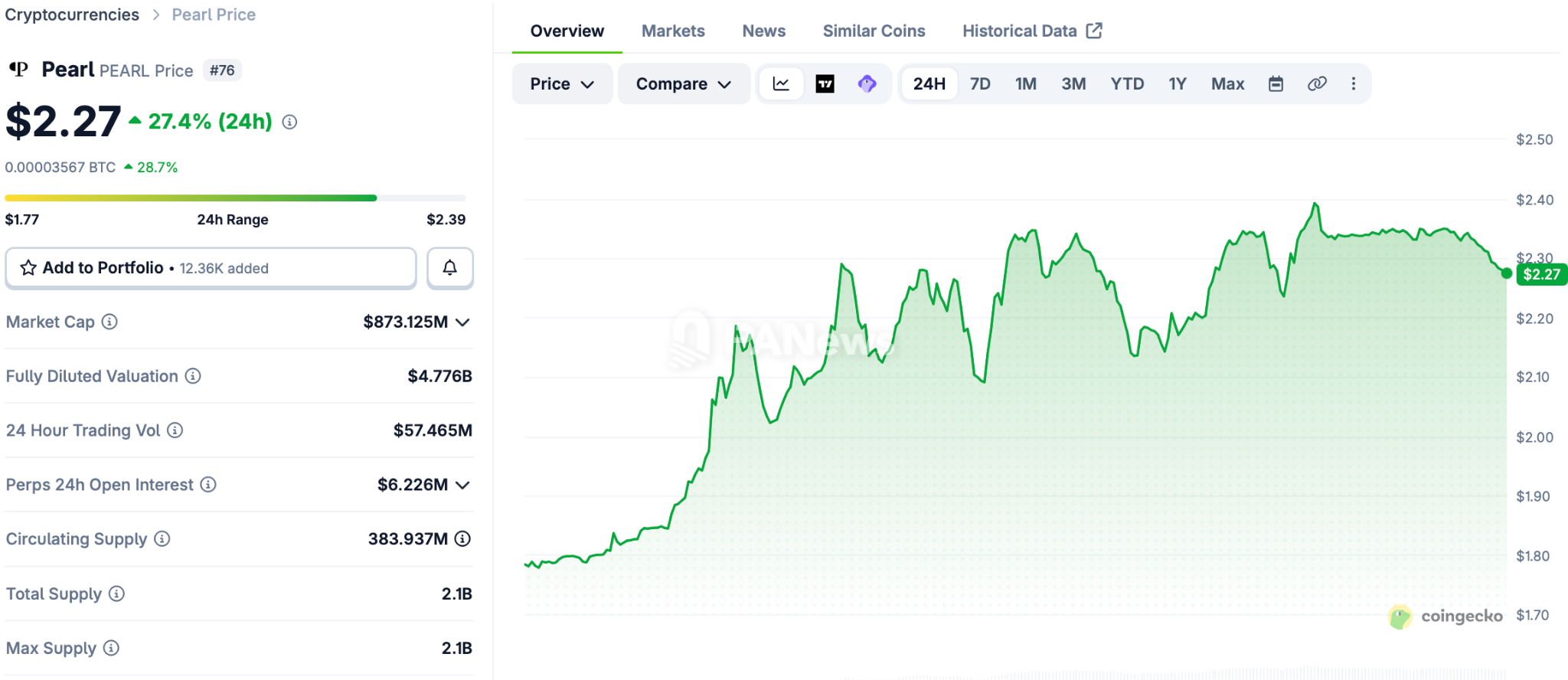
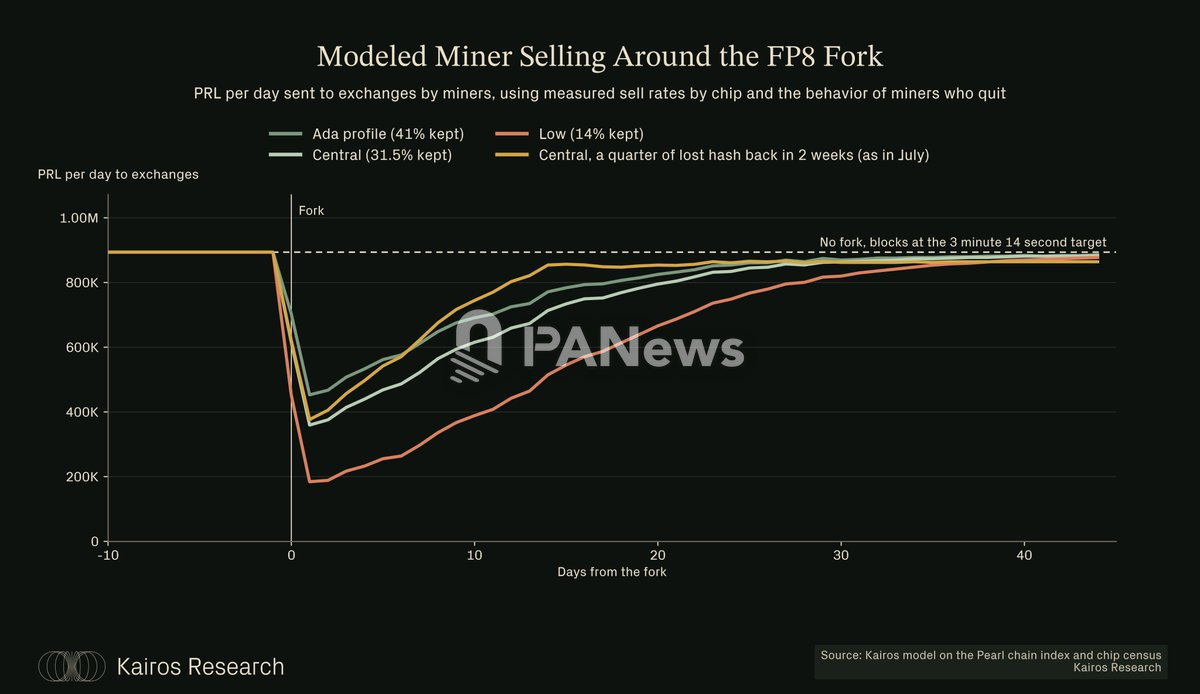
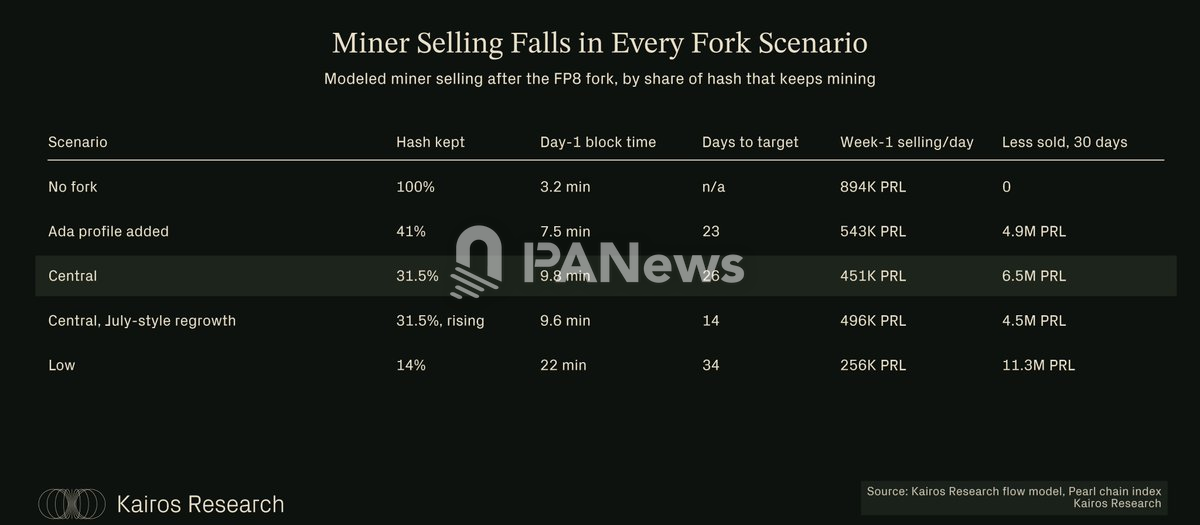
In a survey of six mining pools and roughly 24,200 addresses, Kairos estimated that Hopper and Blackwell hardware accounted for about 37% of network computing power. A mainnet fork applying the restriction could therefore displace much of the existing mining capacity. Kairos modeled a roughly 6.5 million PEARL reduction in miners’ sales during the first 30 days after a fork, partly because blocks could arrive more slowly before difficulty adjusts. That is a forecast, not an observed outcome.
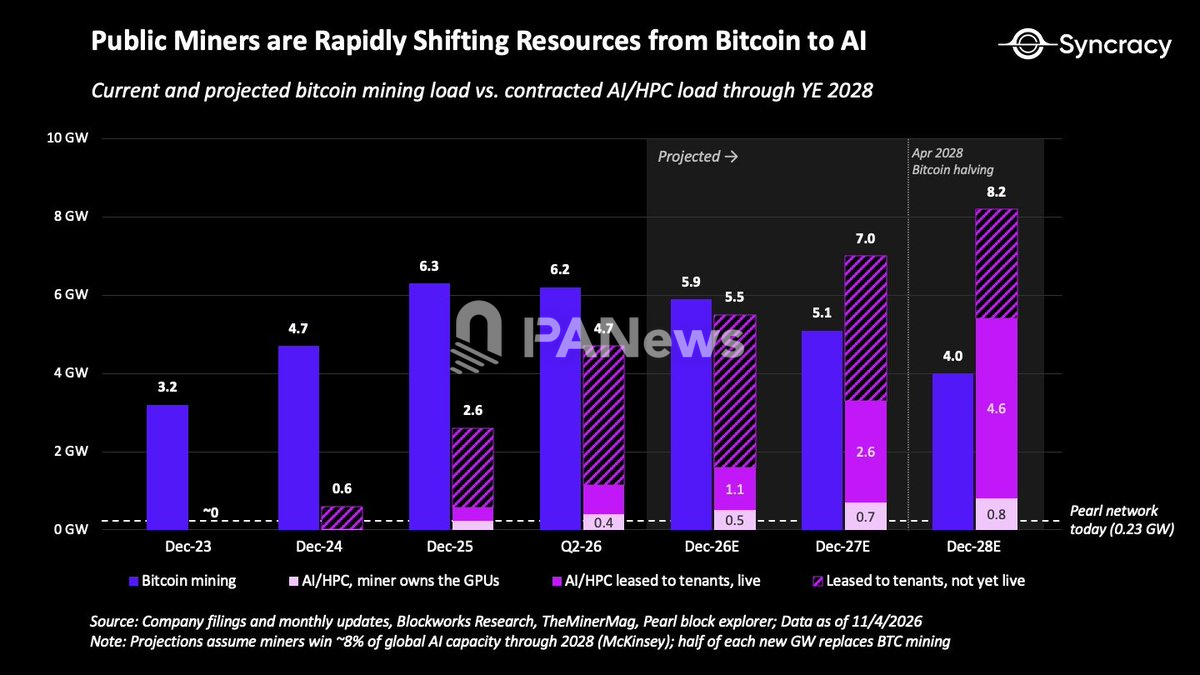
The report also says the existing network did not require mining calculations to come from real AI requests; miners could instead compute random matrices. Blockworks estimated that fewer than 1% of blocks previously matched real AI models. FP8 compatibility alone does not establish that commercial inference will become the dominant source of mining work.
Pearl’s longer-term proposition is that revenue from AI customers could help cover GPU costs while block rewards provide additional income. For builders evaluating the protocol, the next evidence would be a completed mainnet upgrade, lower measured inference overhead and a demonstrable rise in blocks tied to real AI work. None was established by the testnet results reported on November 19.