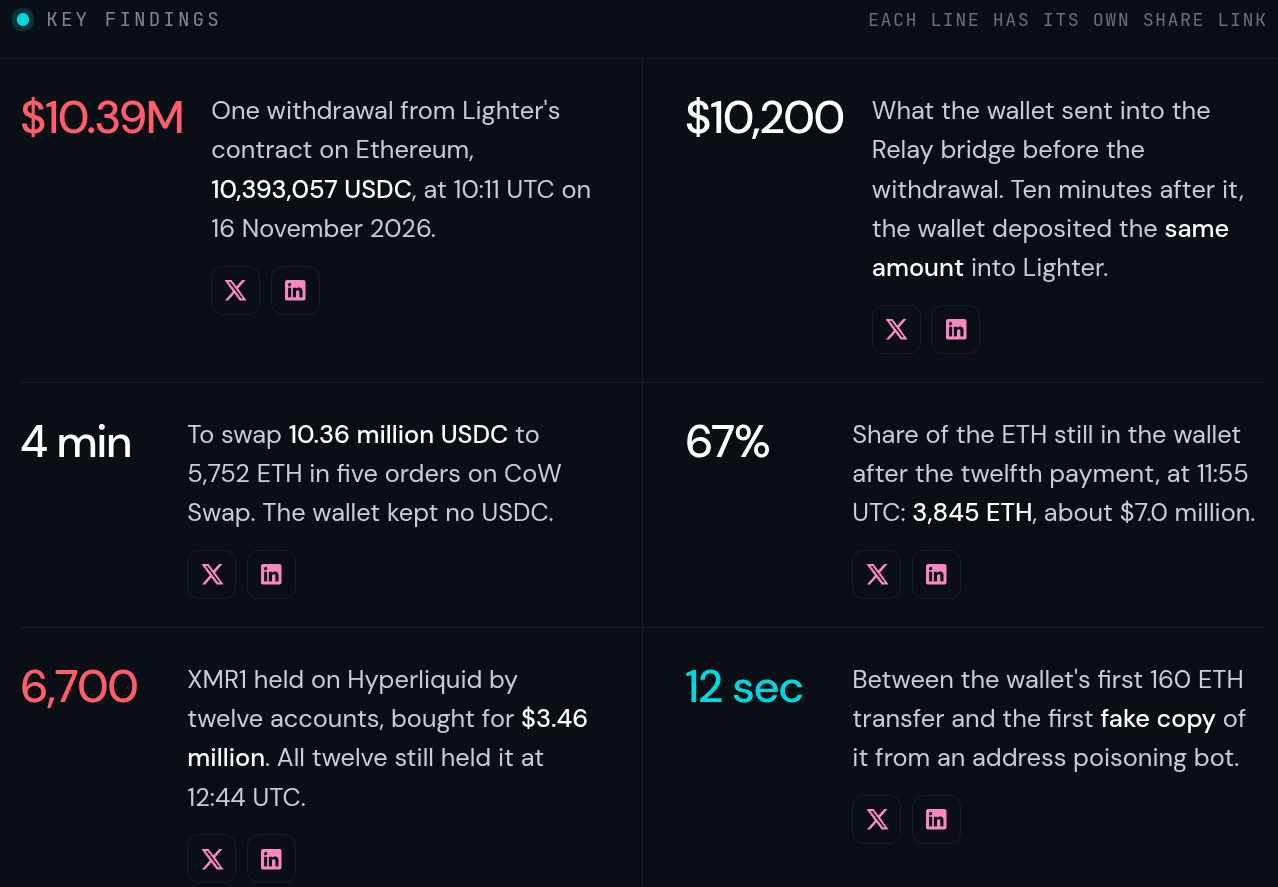
For builders designing account permissions, the Lighter incident is a reminder that blocking withdrawals is not enough if a credential can still move funds through other actions. In reporting published on November 18, 2026, Lighter said an attacker used compromised API keys to transfer funds into a public pool, then redeemed shares held through another account. Bitquery traced a withdrawal of 10.39 million USDC.
Lighter said its protocol and smart contracts were unaffected. It has since restored deposits and withdrawals and returned about $5 million in USDC to the affected trader.
The exchange now requires wallet signatures for transfers into public pools and has made API-key signatures non-public. It also plans IP allowlists and configurable permissions for individual keys; those measures were described as plans, not completed changes.
The development lesson is to evaluate an API key by the financial actions it permits, not just whether it can submit a withdrawal. Accessible accounts, permitted markets, order sizes and overall exposure can all affect the risk of a compromised key. As Lighter put it in its postmortem: “A key that can trade can still lose you money if someone else holds it.”