
For a developer building an AI agent, finding a data source and verifying who supplied a response are two separate tasks. API3’s AirnodeHub, in early access as of November 25, 2026, supports both. Paying the provider through the hub was not yet available. Alongside that work, API3 reported a permanent cap of 200 million tokens, ending five years of new token issuance.
What changes in the token contract
Since 2021, API3’s staking pool had minted roughly 90 million tokens, about 47% of the supply before the change. Its issuance rate was near 950,000 tokens a week, or close to 26% a year. API3 said a final mint brought the total to exactly 200,000,000. The change removed the ability to mint more tokens and transferred ownership of the token contract to a dead address, one that cannot exercise the owner’s powers.
Governance no longer depends on whether a holder stakes tokens. Under the new model, each API3 token counts as one vote, including tokens held in a wallet. Holders decide what to approve; the protocol’s multisignature signers execute those decisions.
How lending revenue funds buybacks
API3 curates on-chain lending markets on Ethereum, Base and Robinhood Chain using its own price feeds. When a price update moves a market, API3 returns the value it recovers from that update, known as oracle extractable value (OEV), to the market. API3 also supplies a substantial share of the deposits from its treasury, taking the same risk as outside depositors. The vaults held roughly $20.5 million in late October 2026.
Revenue from lending curation, price feeds and OEV activity already funds monthly purchases of API3 on the open market. Those purchases are distinct from the supply cap: buybacks acquire existing tokens, while removing the minting function prevents new ones from being created.
What an agent can verify on AirnodeHub
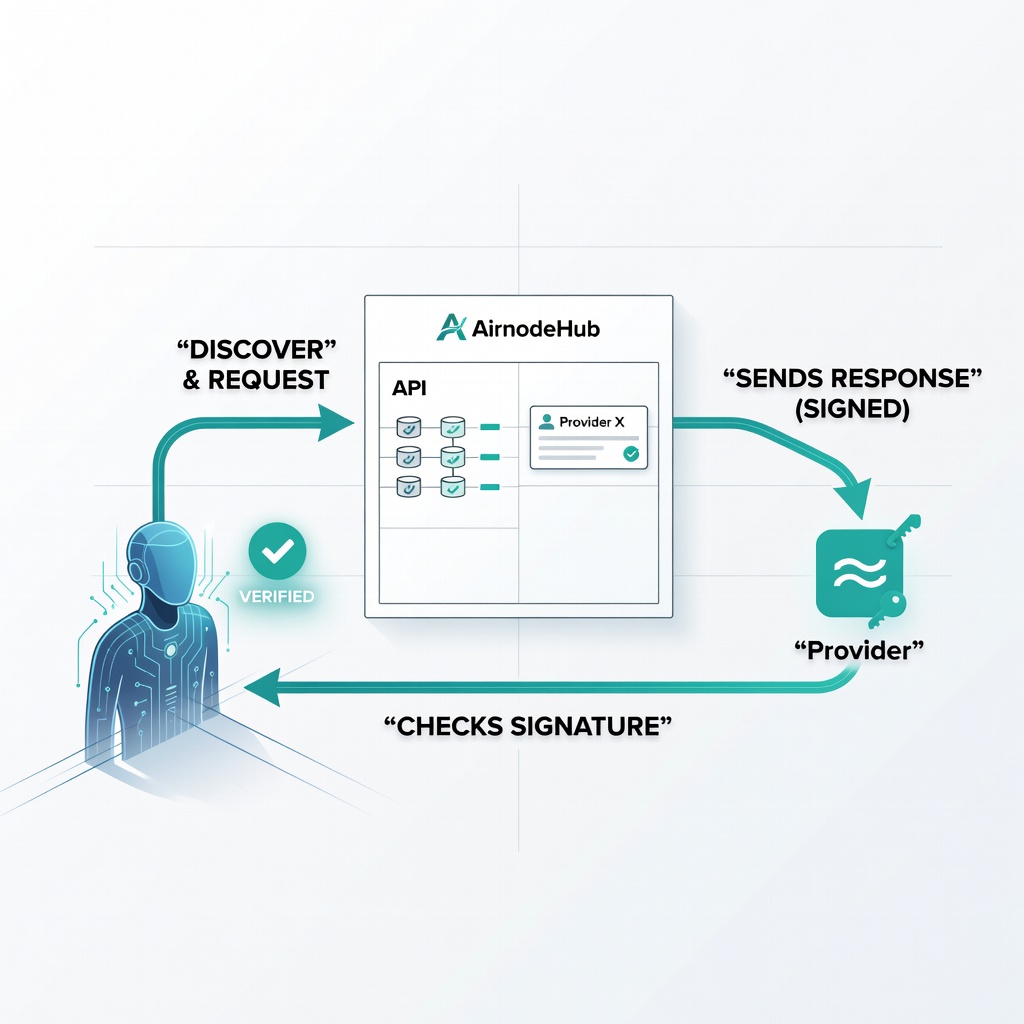
A provider lists an existing API on AirnodeHub and signs each response with its own key. An agent can discover the API, identify the provider, request data and check the signature before using the response. This extends the approach API3’s price feeds have used since 2021: the signature comes from the data provider itself.
AirnodeHub was not generating revenue as of the November report. Once per-request payments are available, API3 plans to let agents pay providers directly and use its share of service fees to help fund token buybacks.
