MegaETH wants users to be able to verify which AI model answered a request. To tackle that problem, the Ethereum layer-2 team is building an application of its own. Swell made a different choice: rather than build an app for SwellChain, it announced it would close the chain and build on Hyperliquid instead.
In a November 25, 2026 analysis of 13 crypto projects, blocmates argued that teams should be judged by whether they respond to what users want, not by whether they stick to their original plans. The distinction is product-market fit: committing money to a new product is a decision a team can make; demonstrating that people want to use it is another matter.
What MegaETH wants users to verify
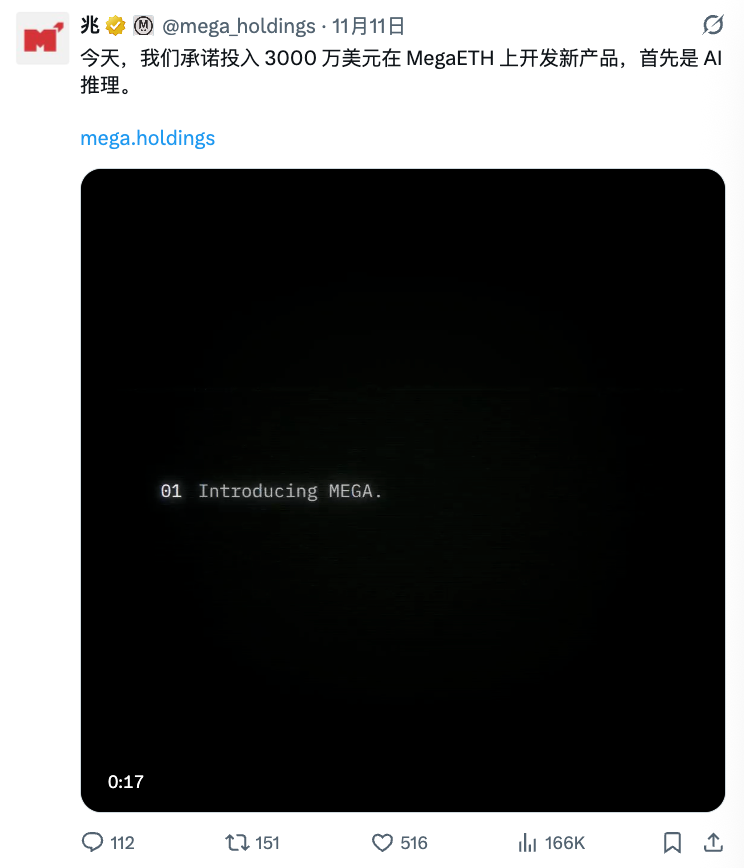
MegaETH announced a $30 million allocation to build products in-house. Its first application, Purified Intelligence, was scheduled to launch in December 2026 as a marketplace for AI inference, the service of running a model to produce an answer.
Providers such as OpenRouter and Venice already serve that market. MegaETH’s premise is that third parties can run open-source models more cheaply than the original labs, but inconsistent standards make it hard for a user to tell whether two offers are equivalent. Purified Intelligence aims to let users compare prices, verify that they are getting the model they requested and obtain assurances about how their data is handled.
Six paths out of liquid restaking
Liquid restaking protocols let users hold a token representing a restaked position. Looking back at the EigenLayer ecosystem it studied in 2024, blocmates found that teams with substantial assets in their protocols had chosen markedly different things to build next.
- ether.fi retained its EigenLayer-integrated liquid restaking business but became better known for financial services: Visa-enabled cards, yield vaults, borrowing and lending, trading and a native stablecoin.
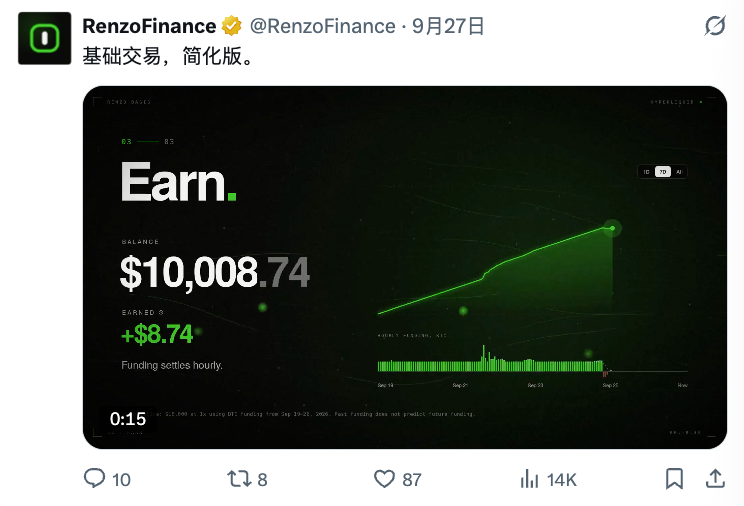
- Renzo Protocol rebranded as Renzo Finance, an asset manager that packages trading strategies in vaults and charges management and performance fees. On the day of the rebrand, it launched Renzo Basis on Hyperliquid. The vault uses a delta-neutral basis strategy: it seeks returns from price differences while offsetting exposure to the direction of the market. Renzo was also considering other chains and decentralized perpetual-futures exchanges.
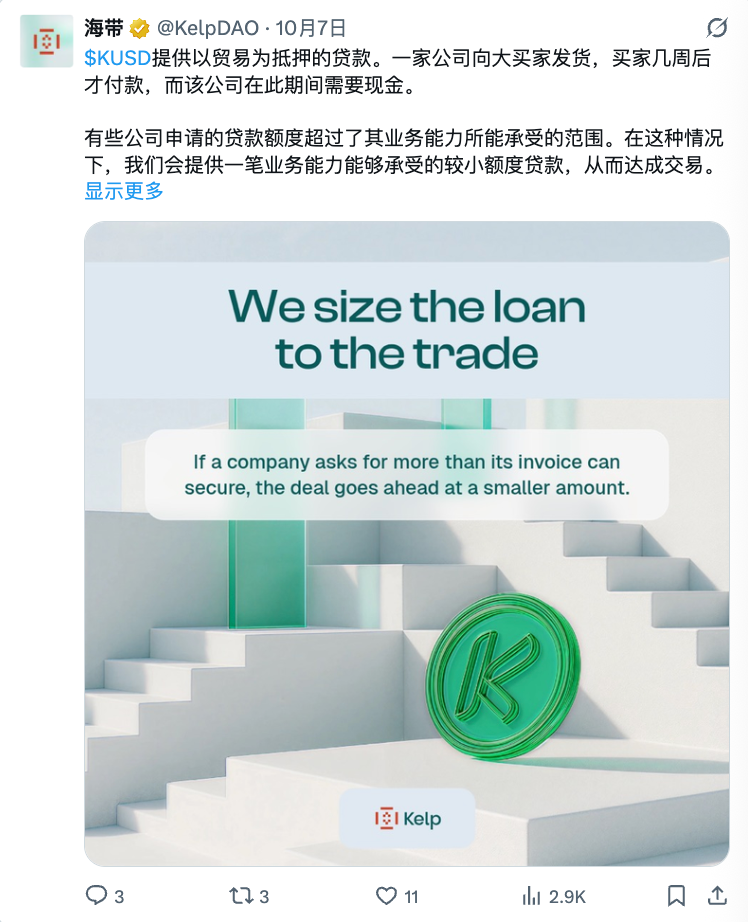
- Kelp shifted toward strategy vaults on Gains after a hack. Its proposed stablecoin, KUSD, had a different intended use: funding institutional payments and foreign-exchange settlement.
- Bedrock shifted its focus from Ethereum to Bitcoin, which already accounted for most of the value locked in its protocol. Its yield vaults allocate BTC to decentralized finance, institutional strategies and delta-neutral trades.
- Puffer stayed with infrastructure. Its work on preconfirmations and based rollups aims to give users an early indication that a transaction will be included while retaining Ethereum settlement. Puffer’s case for serving AI agents rests on confirmations of about 50 milliseconds; that figure refers to the early confirmation, not final settlement on Ethereum.
- Swell announced in April 2026 that it would shut down SwellChain to focus on Faro, a noncustodial AI trading app built on Hyperliquid. Noncustodial means the app does not take custody of users’ assets.
What survives when a team steps back from its chain?
For Igloo, the answer was Pudgy Penguins. The parent company decided to close the Abstract chain and refocus on the Pudgy Penguins intellectual property, NFTs and PENGU token. Abstract had brought in brands including Disney and Red Bull, and its team had resisted calls to issue an ABSTRACT token. In blocmates’ assessment, those brand relationships had not been enough to make the consumer chain work.

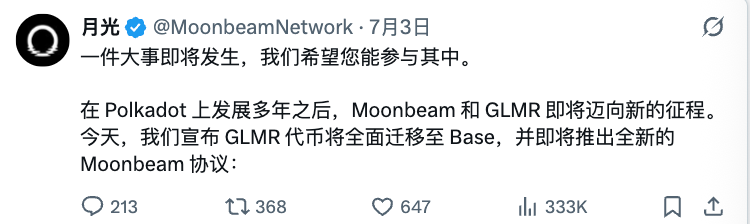
Moonbeam opted to take its token with it. In July 2026, the Ethereum-compatible Polkadot parachain announced plans to move its operations and GLMR token to Base. Its proposed network would let AI agents find one another, agree on terms and settle tasks onchain. Each task would use escrow and be rated against proof of the work.
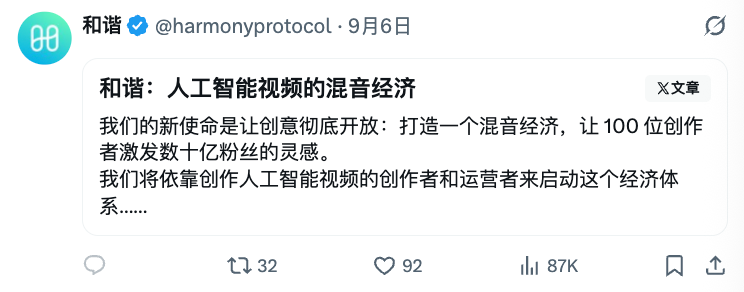
Harmony changed direction after an August 2026 hack. According to blocmates, approximately 3 trillion counterfeit ONE tokens were created, forcing a rollback. Amid calls either to shut down or to reissue ONE on Ethereum, the project chose reissuance. The former sharding project then turned to AI video: in its “Remix Economy,” users can prompt and remix video stories, with protocol token issuance subsidizing GPU computing costs.
A narrower tool, an additional product or an exit from blockchain
Nillion narrowed its original “Blind Computer” concept, a general-purpose system for private computation on encrypted data, to one capability: hidden intent. It calls that work Covenants.
Blocmates described Golem’s Arkiv as an extension rather than a pivot. Golem, which dates to the 2016 initial coin offering era and reportedly still held hundreds of millions of dollars in its treasury, unveiled Arkiv at Devcon earlier in November 2026. The project aims to offer a searchable, tamper-resistant Web3 database, with GLM used to pay transaction fees.
Immutable took the clearest step away from blockchain itself. In June 2026, it laid off nearly its entire internal games team and shifted attention to Audience, an AI marketing platform for game publishers. In August, it opened Audience to studios that had not yet launched on Steam. That offering had no blockchain component. Blocmates also reported that IMX was 99% below its all-time high; it did not establish that the strategy change caused the decline.
For blocmates, the useful comparison was with stablecoins, perpetual futures and tokenized stocks: products that, in its view, people wanted enough to use despite awkward interfaces. That is a test a newly launched vault can begin to face and a proposed marketplace has yet to face. Neither a treasury allocation nor a change of direction settles it.