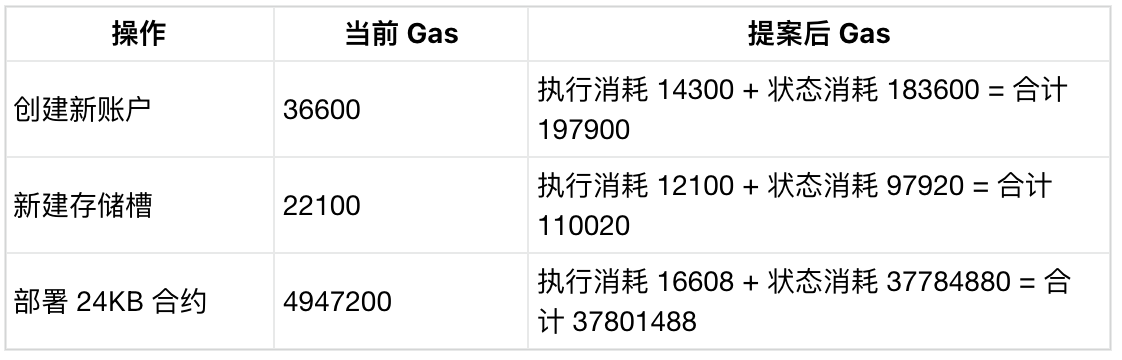
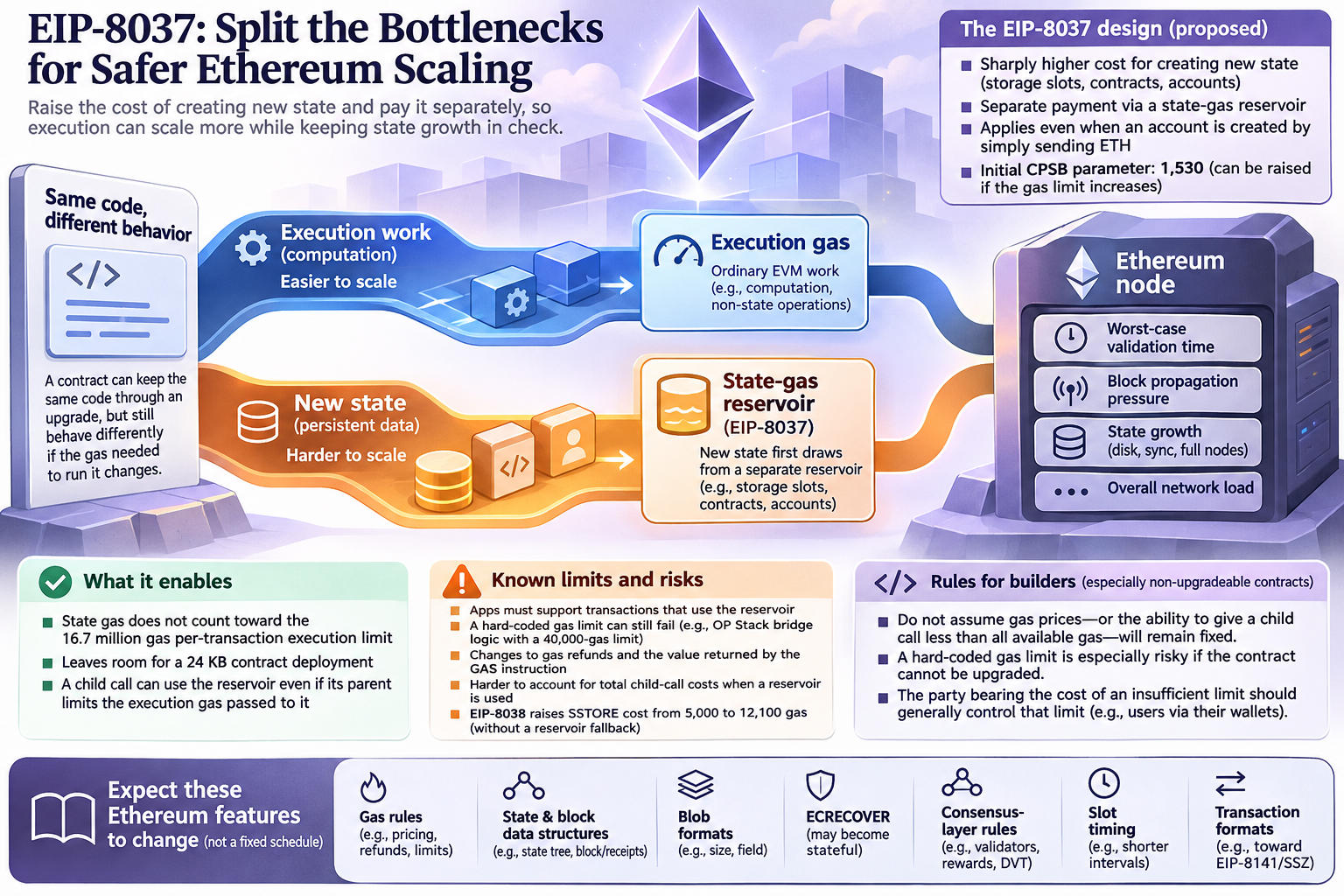
A contract can keep the same code through an Ethereum upgrade and still behave differently if the gas needed to run it changes. That is the practical issue for builders in Vitalik Buterin’s discussion of EIP-8037, reported on November 16, 2026. The proposal would sharply raise the cost of creating new state—including storage slots, contracts and accounts—while providing a separate way to pay that cost.
Why price new state differently?
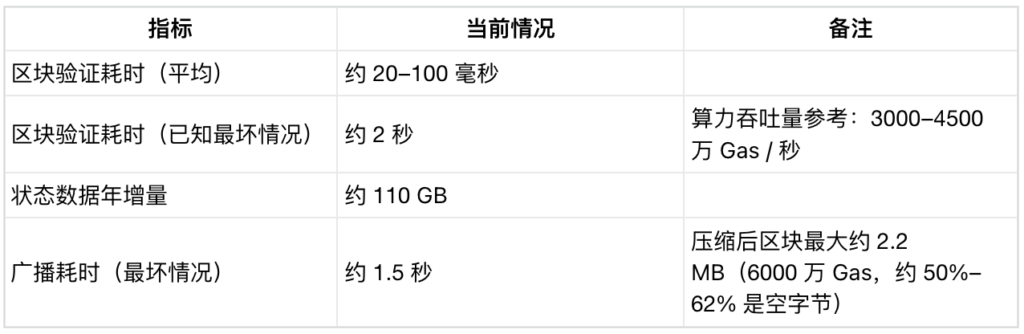
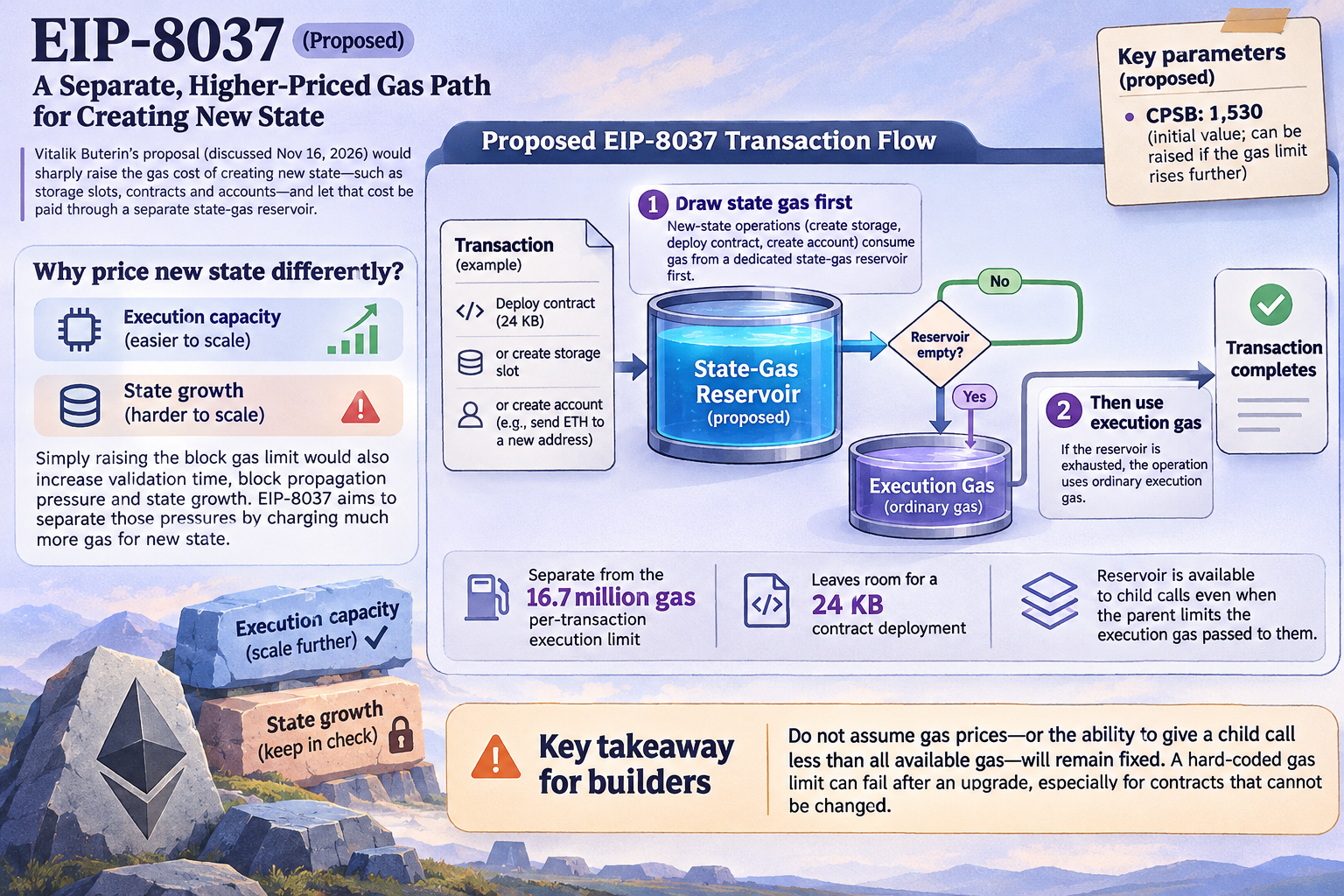
Buterin’s argument is that Ethereum’s resources do not scale at the same rate. More execution capacity is comparatively easier to accommodate; growing the state that nodes must hold is much harder. Simply raising the block gas limit would increase several kinds of load together, including worst-case validation time, block propagation pressure and state growth. EIP-8037 aims to separate those pressures by charging substantially more gas for new state rather than treating it like ordinary execution work.

In Buterin’s account, the proposed charge would apply regardless of how an account is created—even if someone merely sends ETH to an address that does not yet exist. The proposal’s initial CPSB parameter would be 1,530, with scope to raise it if the gas limit rises further. These are proposed pricing rules, not a claim that they had already taken effect.
What the reservoir would change
EIP-8037 proposes a state-gas reservoir alongside ordinary execution gas. New-state operations would draw from the reservoir first and use execution gas only after it is exhausted. State gas would not count toward the 16.7 million gas per-transaction execution limit described in the article; Buterin says this would leave room for a 24 KB contract deployment despite the higher state charge. A child call could use the reservoir even when its parent limits the execution gas passed to it.
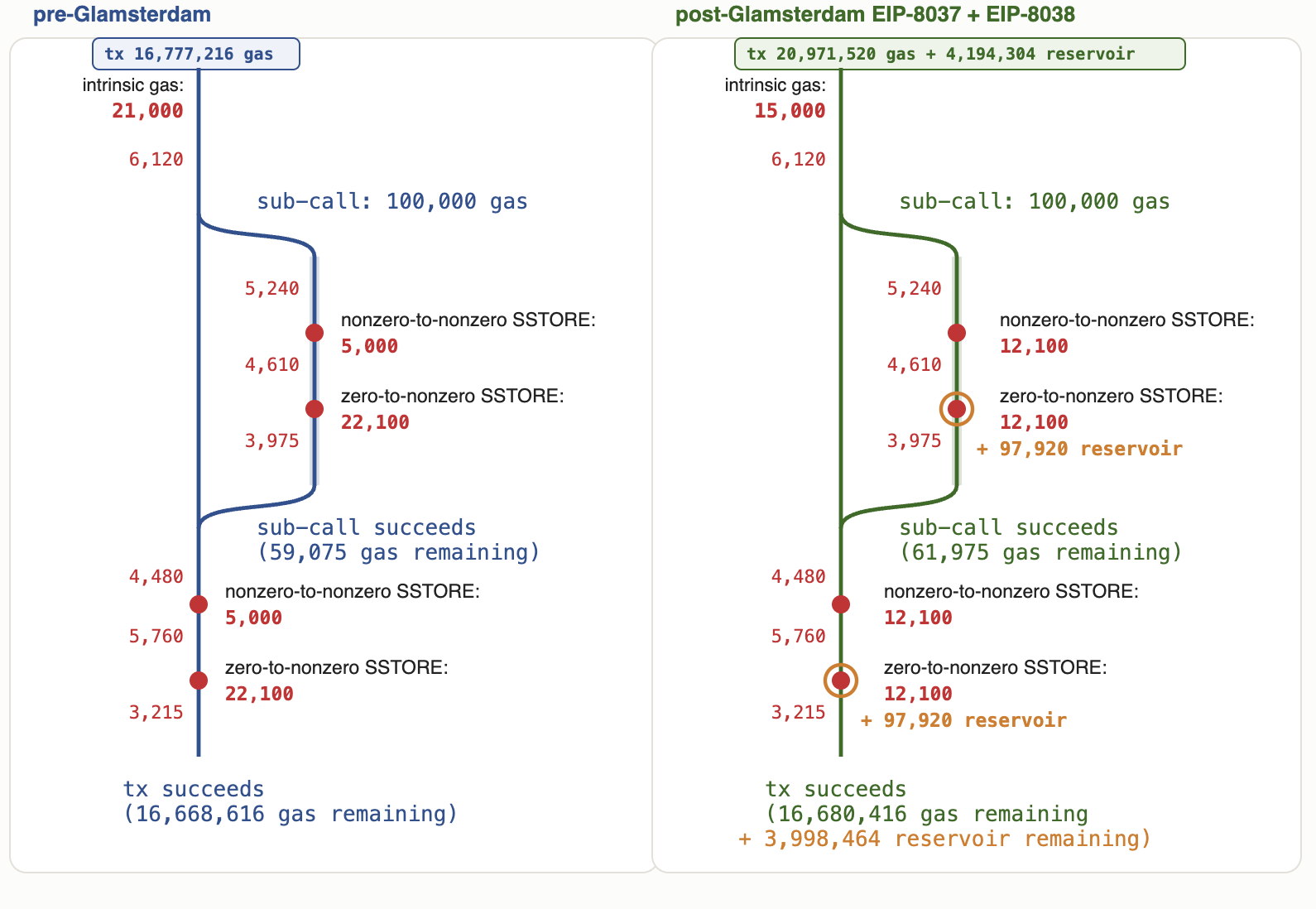
That design could help some calls with fixed execution-gas allowances, but Buterin identifies limits. Applications would need to accommodate transactions that use the reservoir. A call with a hard-coded allowance can still fail if a transaction does not provide one. He cites OP Stack bridge logic with a 40,000-gas limit as an example of a possible disruption. He also flags changes to gas refunds and the value returned by the GAS instruction, as well as difficulty accounting for total child-call costs when a reservoir is used. Separately, he says EIP-8038’s proposed increase in SSTORE cost from 5,000 to 12,100 gas would not have the reservoir as a fallback.
Buterin discusses protocol-level remedies, but presents each as carrying costs or new risks. He says the prevailing approach among core developers at the time was instead to work with application developers to identify and fix affected contracts before Glamsterdam. His account says the upgrade had already been delayed and that public discussion and investigation of affected applications had begun.
A rule for contracts that cannot be upgraded
For builders, Buterin’s central warning is not to assume gas prices—or the ability to give a child call less than all available gas—will remain fixed. A hard-coded gas limit is especially risky when the contract cannot later be changed. He argues that the party bearing the cost of an insufficient limit should generally control that limit, as users typically do when their wallets set transaction gas limits.
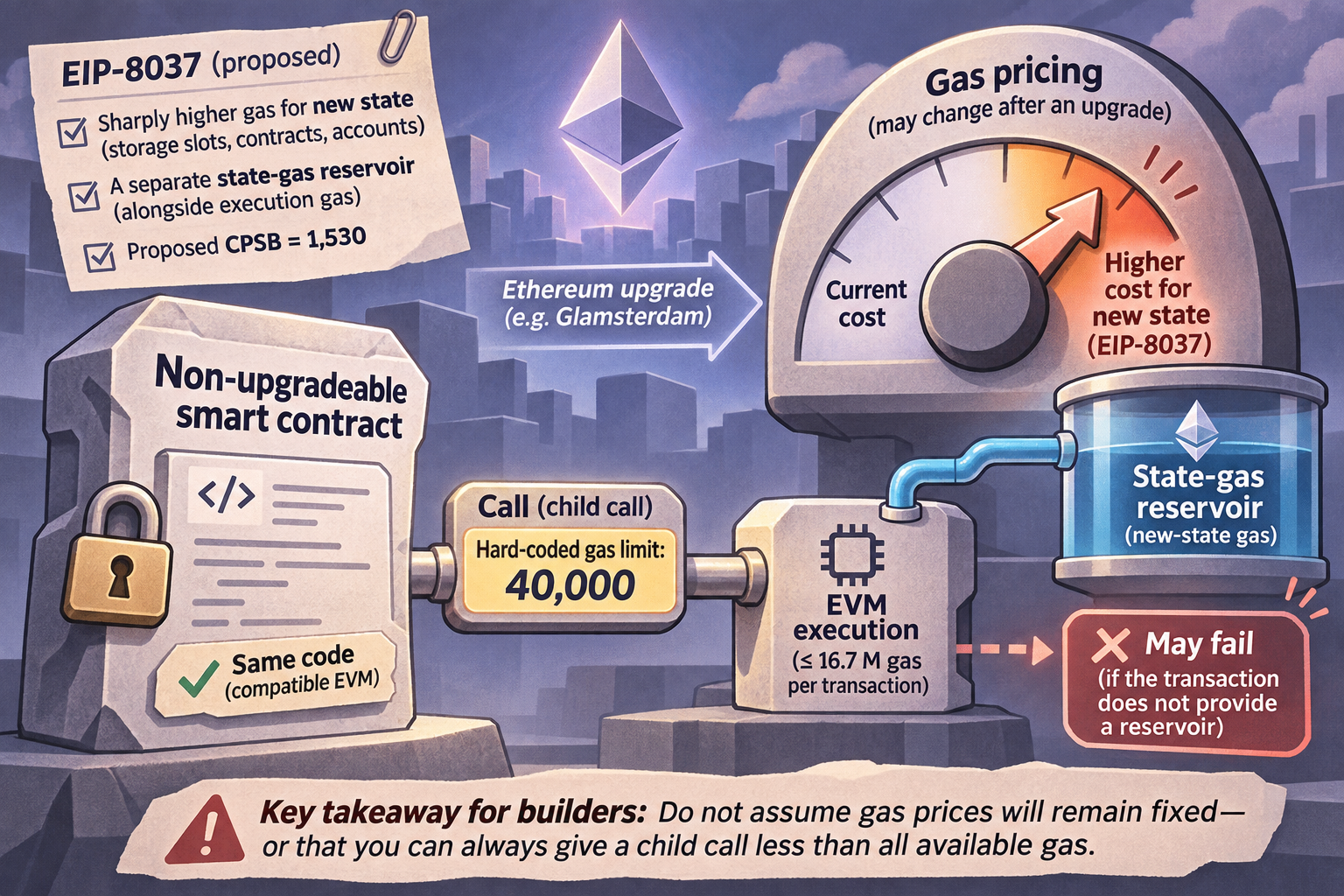
He also calls for clearer documentation of which Ethereum features developers should expect to change. His preliminary list includes gas rules, state and block data structures, blob formats, ECRECOVER, consensus-layer rules, slot timing and transaction formats. These are expectations about possible future changes, not a schedule of enacted upgrades. Buterin says EVM code could retain its execution behavior through a compatibility layer even if the underlying architecture changed; gas costs would remain the important exception for contract developers.